

Do Sunrooms Get Too Hot In Summer? How Michigan Homeowners Stay Comfortable
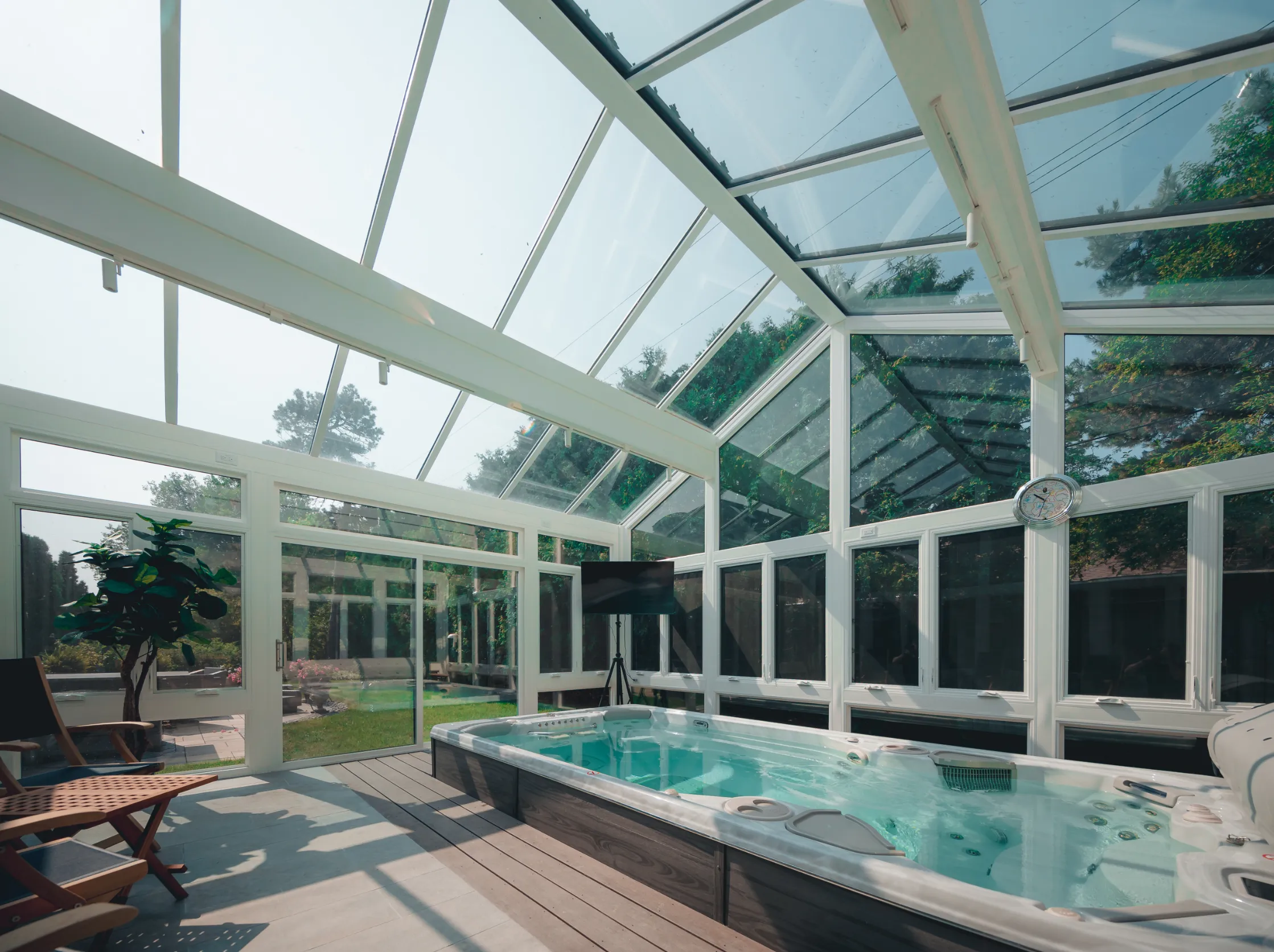
Michigan weather likes to keep you guessing. It has the classic four seasons, but it also has a mischievous streak, bringing changes by week, day, or even hour.
Your summer morning could start cloudy and turn into a hot, sunny day that pours heat into your newly built sunroom. All that heat has you wondering, do sunrooms get too hot in summer? In one word: Sometimes. In a few more: They can if they’re under-designed.
We’re here to change that. Here’s what to know about sunroom installation in Detroit and Southeast MI and how to get maximum sunroom enjoyment all season long.
Why Do Sunrooms Get Hot in Summer?
The main reason comes down to physics and thermodynamics. Specifically, a principle called solar heat gain. Sunroom solar heat gain is when sunlight, also called short-wave radiation, passes through your windows, changes form, and gets trapped inside.
Your furniture, floors, walls, and other furnishings absorb solar energy, convert it to long-wave heat radiation, and release that extra heat into your sunroom. This longer-wave version can’t pass through glass, so the solar gains start to build as more sunlight hits your windows.
Two other reasons are more design-based: lack of insulation and poor ventilation. While your home needs insulation to stay warm in chilly Michigan winters, it also needs insulation to keep cool in summer.
Sunrooms don’t have the typical solid walls you see in the rest of your home. Instead, they’re built with glass panels to capture the sun’s warming rays. Like screened porches, glass sunroom panels give you exceptional views, but they don’t always have the thermal resistance needed to stay comfortable.
Poor sunroom ventilation also traps hot air. If your sunroom doesn’t have good air flow, it quickly gets warm and stuffy because the hot air can’t escape.
What Glass and Ventilation Features Prevent a Sunroom From Overheating?
The best designs have multiple features that keep you and your family comfortable during hot summer weather. Sunrooms should have cooling vents to release trapped heat, cross ventilation for air flow, glass coating (Low-E glass), tinting, or shading to block heat before it enters, or insulated windows that keep the room comfortable.
Maybe the home you grew up in had an uninsulated sunroom, and summer relaxation was anything but comfortable. Or, maybe your utility bills have risen trying to cool your sun-drenched sunroom, and you’re tired of spending all that money. Make your hard-earned salary go the distance with the right glass and ventilation features for an energy-efficient sunroom.
How Does Low-E Glass Reduce Solar Heat Gain?
Low-E glass, or low-emissivity glass, has a very-thin coating of metallic oxide on one side of the glass. This coating helps block solar radiation from passing through the glass, so you stay warm in winter and cool in summer. In other words, it reflects a lot of the sun’s rays before they get inside your home.
Your windows can get this metallic oxide layer during or after manufacturing. The two options are hard-coat and soft-coat.
Hard-coat low-E glass
- During manufacturing and needs high heat
- More durable
- Less expensive
- Moderate blocking abilities
- Better for colder climates
Soft-coat low-E glass
- After manufacturing
- Versatile but more delicate
- More costly
- High blocking abilities
- Better for warmer climates
Low-E glass also helps you reach the optimal Solar Heat Gain Coefficient (SHGC). This term shows how much solar heat enters through your windows. A rating of 1 means full sunlight passes, while a rating of 0 means very little light can pass. For Michigan, aim for windows that have an SHGC rating between 0.30 to 0.40.
What Cooling Options Keep a Sunroom Comfortable on Hot Days?
You don’t want to invest in a four-season sunroom without making sure it has four-season sunroom cooling and heating. Keep your Michigan sunroom comfortable in summer with cooling features like motorized screens, levered vents, and window insulation. Here’s how they work.
Motorized Screens
Motorized screens like MagnaTrack open and close with a built-in motor, so you can say goodbye to the days of manual operation. When mounted to the exterior frame, they give customized shade at the touch of a button. Is the sun’s glare a bit too much for dinner time? Simply close that side. Are you feeling overheated on those hot summer days? Hit the button to close the motorized screens for heat reduction, and enjoy instant sunroom shading.
Levered Vents
Ventilation is another way to stay cool in a Michigan summer. Much like you’d flap your T-shirt to cool down, you can install levered vents that open to let the breeze flow through a stuffy, overheated sunroom. These vents are adjustable openings, typically found near the roof or upper window frame. They’re also angled. An angled placement lets air circulate without letting sudden rain showers drip inside.
Open and close the vents by turning a handle or lever, which adjusts the angle to your specification. Before you know it, the breeze is flowing and the temperature turns comfortable once more.
Insulated Windows
Double- or triple-pane windows have a space between them that’s often filled with krypton or argon gas. Both are inert gases that help block unwanted heat loss or gain. Truly energy-efficient windows also have a mixture of weatherstripping, tight seals, and insulated frames that lower your sunroom air conditioning costs.
HVAC Integration
As an extension of your home, sunrooms can connect to the HVAC system for added cooling capabilities. This integration, typically a supplemental or mini-split HVAC, should be part of the permit process for adding a sunroom to your home.
How Does Skyview Design Sunrooms to Stay Comfortable All Summer?
Simple: We use proven methods and technologies that get results. Skyview has designed and installed sunrooms all over Detroit and Southeast Michigan using our no-pressure process that’s backed by a 100% lifetime warranty. We incorporate energy-efficient glass, high-quality insulation, and proven construction techniques to build sunrooms you’ll love.
If you’re ready to add new living space to your home, you’ll love what we can do. Our Project Engineer-created 3D renderings give you a full view of the design before construction begins, and our white-glove service ensures professional, premium craftsmanship from day one.


