

Screened Porch vs. Sunroom: Which Is Right for Your Michigan Home?
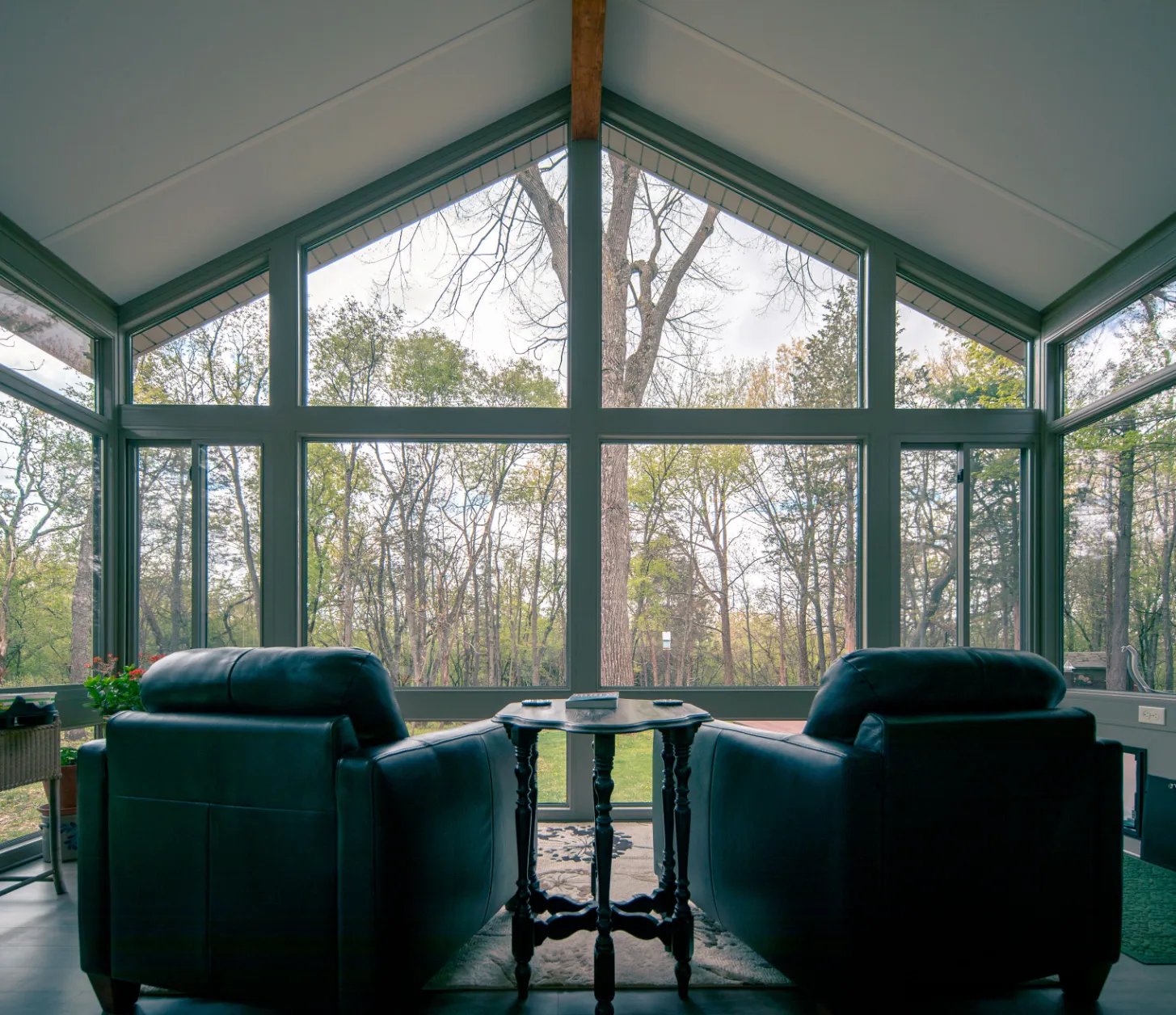
A screened porch is an open-air, screened three-season space; a sunroom is an insulated, HVAC-conditioned room you can use year-round in Michigan. A screened porch costs less and keeps you outdoors with the weather managed, while a sunroom adds permanent, conditioned square footage that counts toward your home’s finished area. Ready to compare in person? Get your free quote.
Key Takeaways
- Definition: A screened porch is an open-air room with mesh walls (about three usable seasons in Michigan); a four-season room / sunroom is insulated and tied to HVAC for year-round use.
- The middle tier: A three-season room is enclosed with glass or vinyl but is *not* fully insulated or conditioned—warmer than a screened porch, but not a true winter room.
- Cost: A screened porch is far cheaper (a 20×20 runs about $5,000–$10,000). A four-season sunroom in Southeast Michigan typically runs $20,000–$100,000+ because it’s full construction.
- Michigan winters: Only a four-season sunroom is realistically usable in January. A screened porch is not a year-round space.
- Resale: A permitted, conditioned sunroom adds finished square footage appraisers can count; a screened porch does not, though it still shows well.
- Fastest upgrade: MagnaTrack motorized retractable screens turn an existing patio or deck into a bug-free room in days—no foundation required.
You have a patio or a deck you like and a short list of months you actually use it. Bugs take June, rain takes half the evenings you planned around. By October, the space sits empty.
So you start comparing a screened porch vs. sunroom in Michigan.
One keeps you outside with the weather managed. The other adds conditioned square footage to the house. Stick around for all the details.
Screened Porch vs. Sunroom vs. Three-Season Room: Quick Comparison
The fastest way to see where each option fits is side by side. Costs below are Michigan estimates and vary with size, roof structure, glass, and site conditions.
| Factor | Screened Porch | Three-Season Room | Sunroom (Four-Season) |
| Structure | Roofed, open-air; mesh panels where walls would go | Enclosed with glass or vinyl panels; non-insulated walls | Insulated, glass-enclosed room on a foundation with permanent walls |
| Cost (MI, per sq ft) | ~$15–$40/sq ft (≈$5,000–$10,000 for a 20×20) | ~$80–$200/sq ft | ~$150–$400+/sq ft (≈$20,000–$100,000+) |
| Seasons usable in MI | ~3 seasons (roughly May–October, 5–6 months) | Spring, summer, fall; cold and drafty in deep winter | All four seasons, including January |
| Insulation / HVAC | None; sits at outdoor temperature | Limited; optional space heater, not fully conditioned | Fully insulated and tied into the home’s HVAC |
| Permit | Usually required (varies by municipality) | Required | Required (structural, electrical, and mechanical) |
| Adds finished sq ft / resale | No; not counted as finished area, but shows well in photos | Usually not counted as conditioned finished area | Yes; permitted, conditioned square footage appraisers can count |
| Best for | Bug-free outdoor living at the lowest cost | Extending the shoulder seasons on a mid-range budget | Year-round living space plus added resale value |
What’s the Difference Between a Screened Porch and a Sunroom?
A screened porch is a covered outdoor space with mesh panels where walls would go. It sits at outdoor temperature and keeps insects, pollen, and blowing rain out.
A sunroom is an insulated, glass-enclosed room attached to the house, with a foundation, permanent walls, and a connection to your HVAC. It counts as finished square footage.
Think of it like the difference between a windbreaker and a winter coat. One is built for a mild evening, the other for February. The sunroom vs. screened porch decision comes down to which problem you are solving.
Is a Screened-In Porch the Same as an Enclosed Porch?
No, a screened-in porch uses mesh, so the space stays open to outside air. An enclosed porch uses solid walls, glass, or vinyl panels, which seal it off and allow it to be heated.
A three-season enclosed porch has glass but no insulation or HVAC, so it holds heat in spring and fall and loses it in January. Converting a porch to a sunroom adds insulation, code-compliant framing, and a conditioned envelope, which makes it a construction project.
Purpose-built glass enclosure systems are one way to close in a porch when you want light and views without committing to a full insulated build.
How Do You Decide Between a Screened Porch and a Sunroom in Michigan’s Climate?
Start with the calendar, not the floor plan.
Michigan gives you about five reliable outdoor months, a long shoulder season on either end, and a winter that no mesh will fix.
The three-season vs. four-season room distinction settles most of these decisions. A three-season space covers spring through fall. A four-season space, meaning a year-round sunroom with insulation and a heat source, works in January at the cost of a much larger project.
How Many Months a Year Can You Actually Use a Screened Porch in Michigan?
Most Metro Detroit homeowners get comfortable use from May through September, plus usable evenings in April and October. That is five to six months with no help at all.
Add a heat source and a wind block, and the number climbs. Screens that seal at the edges hold warm air well enough that heaters carry the space into November, the biggest lever on usable months for any outdoor living space in Michigan.
Does a Sunroom Cost More Than a Screened Porch?
Yes, usually by a wide margin. A 20×20 screened-in porch costs about $5,000 to $10,000 in 2026, depending on materials and roof structure. Screened porch cost in Michigan varies more with the roof than with the mesh.
A four-season sunroom in Southeast Michigan costs between $20,000 and $100,000 or more, because the price covers a foundation, insulated glass, framing, permits, and a tie-in to the home’s mechanical systems. Sunroom cost tracks construction cost.
Does a Sunroom Add More Resale Value Than a Screened Porch?
Usually yes. Appraisers count conditioned, permitted square footage. A sunroom adds to the finished area of the home. A screened porch does not, though it still shows well in listing photos.
The tradeoff is cost per usable month, and a screened space wins there for most families.
Insulation, HVAC & Energy Use in Michigan Winters
For year-round use, insulation and heat are the whole ballgame. A screened porch has no thermal envelope, so it can never be a January room no matter how many heaters you add. A three-season room slows heat loss but still leaks it through non-insulated walls and single- or basic double-glazing. A four-season sunroom is the only tier built to hold heat: insulated framing, insulated glass, and a connection to your home’s HVAC or a dedicated mini-split.
Glass choice drives comfort and energy bills. For a cold climate like Michigan, look for high-performance, low-E insulated glazing. The U.S. Department of Energy recommends low U-factor windows for heating-dominated climates, and ENERGY STAR’s Northern climate zone criteria set the window performance thresholds that keep a year-round sunroom in Michigan comfortable and efficient. If your goal is to use a sunroom year-round in Michigan, spec the glass and heat source before you fall in love with the floor plan.
Permits & Building Code in Michigan
Almost any of these projects needs a permit, and the requirements scale with the tier. A screened porch usually needs a building permit for its roof and structure. A three-season room adds envelope and sometimes electrical requirements. A four-season sunroom is full construction—structural, electrical, and mechanical permits, plus inspections—because it becomes conditioned living space tied to the house.
Codes and enforcement are handled locally, under the state framework from Michigan’s Bureau of Construction Codes (LARA). Rules vary by municipality, so setbacks, footings, and egress can differ from one township to the next. Our guide to screened porch permits in Michigan walks through what to expect, and Skyview handles permitting as part of the build.
Maintenance & Durability
A screened porch is the lowest-maintenance option: occasional cleaning, and screen panels that are inexpensive to repair or replace if a branch or pet puts a hole in them. Modern motorized screens retract into a protected hood, which keeps the mesh out of the weather when it isn’t in use and extends its life.
A three-season room adds glass or vinyl panels to clean and seals to check. A four-season sunroom carries the most upkeep—glazing, weather seals, and HVAC service—but it’s built to last decades as part of the house. Across all three, aluminum framing and quality hardware hold up far better than wood against Michigan’s freeze-thaw cycles.
Can You Get a Screened Porch Experience Without Building an Entirely New Structure?
Yes. Motorized screens turn an existing patio, deck, or covered porch into a bug-free, wind-protected room with no new framing and no foundation. The patio enclosure takes days.
A StruXure louvered pergola handles the other half. The louvers rotate for full sun, partial shade, or a closed roof with a 100% leak-free guarantee, and screens mount to the sides of the same structure. If conditioned space is the goal, LivingSpace Sunrooms is the four-season build.
How Does a Motorized Screen System Work?
A motor in a hood above the opening rolls the mesh down between two side tracks.
MagnaTrack motorized screens hold the screen edge with rare earth magnets, so there is no zipper to jam.
Think of the track as a magnetic cabinet latch running the full height of the opening. The system carries a 75 mph wind rating, spans up to 30 ft in a single screen, and runs from a remote, a wall switch, or your smart home system.
Which Option Is Right for Your Michigan Home?
Choose the sunroom if you want year-round space that counts as part of the house and you are ready for a construction timeline. Choose motorized screens if the space you already own needs to be usable more of the year.
Skyview designs and installs across Metro Detroit, backed by a 100% lifetime warranty, white-glove service, and a lifetime partnership after installation. Our design process moves at your pace, and a custom 3D rendering shows you the finished space in your own home before the build begins.
Contact us today to set up a free in-home design consultation.
Frequently Asked Questions
What’s the difference between a screened porch and a sunroom?
A screened porch is an open-air, roofed space with mesh walls that sits at outdoor temperature—about three usable seasons in Michigan. A sunroom is an insulated, glass-enclosed room on a foundation, tied to your HVAC, that you can use year-round and that counts as finished square footage. The screened porch manages the weather outdoors; the sunroom adds conditioned living space.
Is a sunroom or screened porch cheaper?
A screened porch is cheaper—usually by a wide margin. A 20×20 screened porch runs about $5,000–$10,000 in Michigan, while a four-season sunroom in Southeast Michigan typically runs $20,000–$100,000 or more because it’s full, permitted construction with a foundation, insulated glass, and mechanical tie-ins. A three-season room falls in between.
Which is better for Michigan winters?
A four-season sunroom is the only option realistically usable in a Michigan winter. It’s insulated and heated, so it holds temperature in January. A screened porch has no thermal envelope and is not a year-round space, and a three-season room loses heat too quickly to be comfortable in deep cold.
Which adds more resale value?
A permitted, conditioned four-season sunroom adds the most resale value because it becomes finished square footage appraisers and buyers can count. A screened porch and a non-conditioned three-season room generally don’t add to finished area, though a screened porch still boosts appeal in listing photos.
Which gives more usable seasons?
A sunroom gives all four seasons. A screened porch gives about three (roughly May–October, or five to six months in Metro Detroit), which a heat source and edge-sealing screens can stretch into November. A three-season room covers spring through fall with better wind and rain protection than mesh, but still isn’t a true winter room.
Do you need a permit, and does insulation differ between them?
Yes to both. Screened porches, three-season rooms, and sunrooms all typically require permits in Michigan, with requirements scaling from a basic building permit up to full structural, electrical, and mechanical permits for a sunroom. Insulation differs sharply: a screened porch has none, a three-season room has limited insulation and no full HVAC, and a four-season sunroom is fully insulated and conditioned. Local rules vary by municipality under Michigan’s Bureau of Construction Codes.


