

Can You Use A Sunroom Year-Round In Michigan?
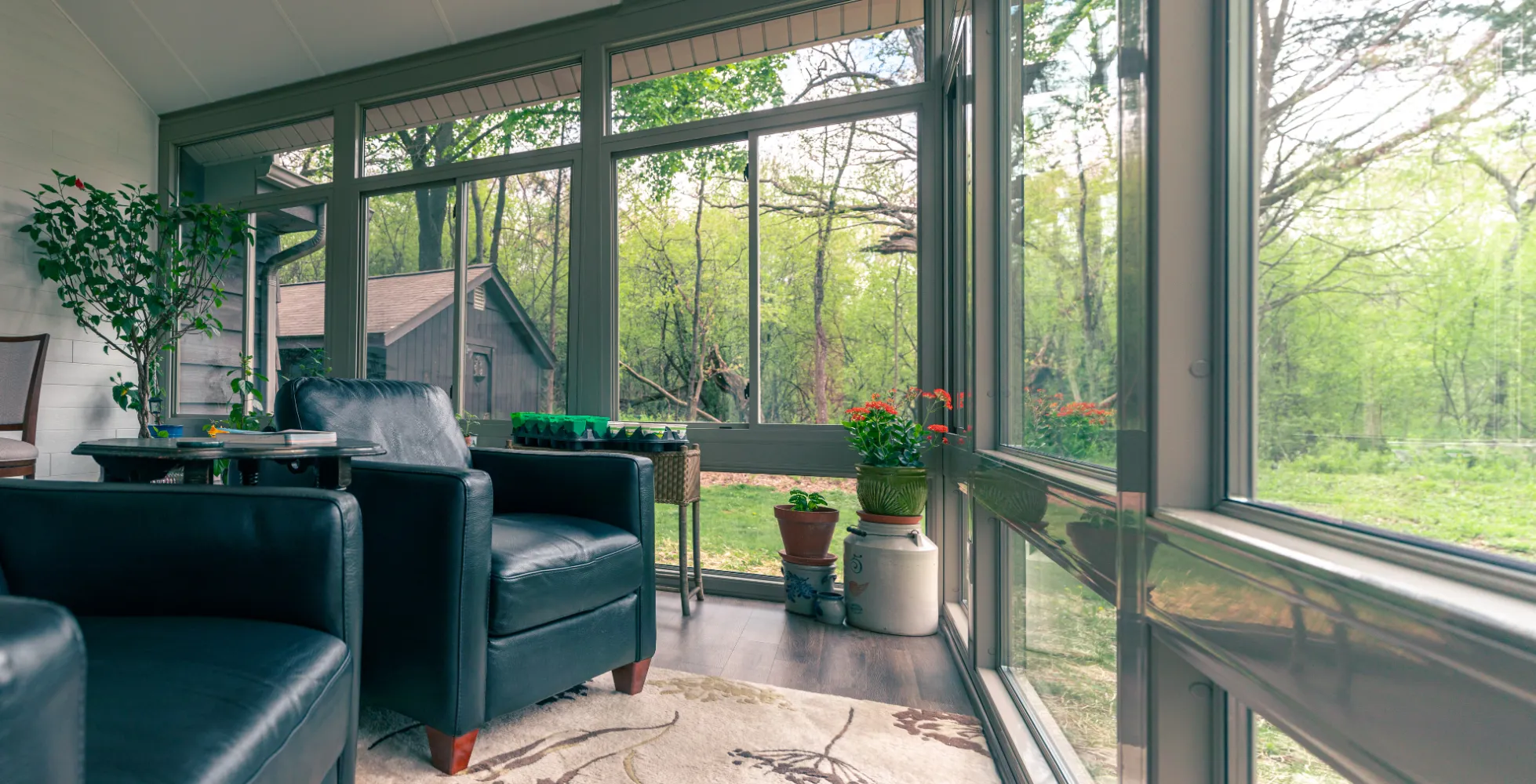
There are two common types of sunrooms: three-season and four-season rooms. While the former has long been the typical design, especially in warmer climates where sunrooms are common, the latter is becoming increasingly popular, especially in cold regions like Michigan. Man homeowners prefer four-season sunrooms because they’re comfortable year round, able to comfortably withstand both the winter chill and the summer heat.
Before committing to a sunroom installation in Detroit and Southeast MI, you’ll need to decide whether you want to use your space year-round, or if you’d rather stick to a three-season room that’s closed for winter. You may find there are many benefits to choosing a four-season construction for your sunroom, even if you don’t plan to spend much time in it during the winter.
What Does “Year-Round” Actually Mean for a Michigan Sunroom?
Before you apply for a sunroom permit in Michigan, you’ll probably need to decide whether you want a three-season room or a year-round, four-season sunroom. A year-round sunroom in Michigan is one that can stand up to both the deep freezes, heavy snows, and dense ice that Michigan winters are known for, as well as the heat and humidity of a Michigan summer afternoon. If a sunroom is truly “year-round,” you should be able to use the space comfortably 365 days a year.
This type of year-round sunroom is often called a four-season sunroom, because it can be used in all four seasons of the year, unlike a three-season sunroom, which may not be insulated well enough for winter use. Year-round sunrooms are insulated, conditioned living spaces that are temperature-controlled to remain comfortable in both sweltering heat and freezing cold.
What’s the Difference Between a Three-Season and a Four-Season Sunroom?
The difference between a three-season and a four-season sunroom is right there in the name. A three-season sunroom is meant to be used only in the three warmest seasons: spring, summer, and fall. They’re not designed to be used during winter, because they aren’t engineered to retain heat or withstand drastic temperature changes. Instead, they should be winterized and sealed off for the season each year, then reopened for use again in the spring once there is no more snow or frost that could damage the interior.
A four-season sunroom is equipped to handle all four seasons. They’re typically better insulated, with energy-efficient features like low-E windows and high-density insulation that keeps them comfortable whether you’re enjoying the sun on a hot day in July or sipping on cocoa during a frigid January snowstorm.
Additionally, three-season rooms are most often separate from the home’s heating and cooling system. They may be cooled by fans or portable air conditioners in the summer, but are unlikely to be well-insulated enough to heat properly in the winter. Four-season rooms, on the other hand, are fully insulated like the rest of the home, and can even be tied into the house’s HVAC system for year-round heating and cooling.
Can a Sunroom Really Handle Michigan Winters?
If it’s built properly, a sunroom can absolutely handle Michigan winters. Just like the rest of your home, sunrooms can be designed with energy-efficient, heat-trapping features that keep the space comfortable. Sunrooms can be specifically engineered to stand up to harsh winters, with heavy-duty frames and roofs with high snow load ratings that can bear even the heaviest Michigan snowstorms without compromising the structure.
With proper insulation, heating, and cooling, you can enjoy a four-season sunroom all winter long without worrying about getting too cold. Energy-efficient windows, heavy-duty insulation, and thermally broken frames on windows and doors can create a conditioned living space ready for any weather, from frigid winter nights to sweltering summer afternoons.
What Insulation and Glass Are Needed for Cold-Weather Comfort?
In order to properly protect a sunroom against the winter cold, you’ll need to invest in high-quality sunroom insulation and energy-efficient glass. Sunrooms are often constructed primarily of glass, with floor-to-ceiling picture windows designed to give you the best possible view of the outdoors. But with all that glass, there’s nowhere to install traditional insulation such as fiberglass batting or closed-cell spray foam.
The solution is energy-efficient insulated windows. Double- or triple-paned glass creates air pockets that slow heat transfer. Some windows also incorporate a layer of argon or krypton gas sealed in between the panes. Because these gases are dense and non-reactive, they don’t transfer energy easily, further impeding heat transfer from one side of the glass to the other.
For maximum insulation, choose windows with a low-E coating. Low-E glass is coated with a thin metallic layer that reflects heat and radiation while still allowing visible light to pass through. When combined with double-paned, gas-filled windows, low-E glass coatings reduce heat transfer to almost nothing, keeping heat from getting inside during the summer and preventing it from escaping during the winter.
For the rest of the sunroom, insulate your walls, ceiling, and floors with heavy-duty insulation such as high-density fiberglass batt or closed-cell spray foam that creates tons of tiny air pockets to slow heat transfer. Seal any gaps with caulk or more spray foam, and minimize heat transfer through windows and doors by choosing a thermally broken frame material such as vinyl or PVC, instead of the traditional aluminum window and door framing most commonly used on sun porches.
Why Do Some Sunrooms Fail To Perform Year-Round?
Sunrooms often fail to perform year-round simply because they’re not designed to. Most sunrooms are built to be three-season rooms, used in the spring, summer, and fall, but sealed off and winterized during the coldest months.
These rooms fail to perform because they aren’t built with winter in mind. They use thin materials and minimal insulation, because they don’t need to be insulated when it’s warm. But when the cold weather hits, they’re almost impossible to heat properly and can’t withstand high winds or heavy snows.
The sunrooms that survive the winter are built for four seasons, with fully insulated walls, ceilings, and floors, and energy-efficient insulated windows. This helps retain heat and lock out wind and frigid exterior temps, which three-season sunrooms just aren’t built to do.
What Happens When a Three-Season Room Gets Used All Year Anyway?
Three-season rooms aren’t designed to be used through the coldest months. They’re typically less insulated, and often have single-pane glass windows and metal window and door frames that conduct heat easily.
If you try to use a three-season room in all four seasons, the first thing you’re going to notice is that it’s almost impossible to keep warm. Even if you winterize your sunroom with heavy plastic sheeting or retractable screens, they’re just not built to retain heat. You’ll end up blasting space heaters at top power and still huddling under blankets to keep warm, all the while skyrocketing your energy bills.
Trying to heat a three-season room in winter can also have adverse effects on the integrity of the room itself. Because the space isn’t built for these wild fluctuations between heat and cold, it may suffer structural issues such as warping window frames and faster wear on single-pane windows. Moisture buildup and condensation from the drastic temperature changes can also lead to mold or mildew.
Heat loss through an uninsulated roof can also wreak havoc. Melting ice and snow can refreeze into ice dams that prevent proper runoff and lead to pooling water, leaks, and other structural damage to the roof.
If you plan to use your sunroom year-round, it’s important to build it with winter in mind, taking Michigan’s ice, snow, and biting winds into account when choosing features like windows and insulation. It’s much easier to build a four-season room in the first place than to try to convert a three-season room into a year-round sunroom later on.
What Heating and Cooling Setup Keeps a Sunroom Comfortable in Every Season?
The most common way to keep a four-season sunroom comfortable is by tying it directly into your home’s main HVAC system. Adding ductwork that connects to your existing heating and cooling enables you to control the sunroom’s temperature alongside the rest of the home.
Many sunrooms are designed with a ductless mini-split system. This is a two-part system that includes an ourdoor compressor and an indoor air management system that allows you to control the sunroom’s heating and cooling separately from the rest of the house. This may be ideal if you don’t plan to use your sunroom as frequently and may want to save energy costs associated with temperature control.
If you live in a cooler climate where summer cooling isn’t as critical, you can also heat a sunroom using electric baseboard heaters or radiant floors. These keep the floor nice and toasty, so you never have to worry about freezing your toes on frigid floors. The heat then rises and warms the rest of the space from the ground up.
How Does Skyview Build Sunrooms for True Year-Round Use in Southeast Michigan?
At Skyview, we pride ourselves on precision details and high-quality construction that turn any sunroom into a year-round living space you can enjoy in any season. We protect your sunroom using high-quality insulation materials and energy-efficient, low-E windows that keep the space cool in the summer and toasty in the winter. We can connect your sunroom HVAC to the rest of your home for consistent comfort, or install external heating and cooling that can be controlled independently.
If you’re ready to see what our experts can do with your sunroom design, contact us for a free in-home design consultation and quote. We provide sunroom installation in Detroit and Southeast MI designed to give you the customized indoor-outdoor space of your dreams.


