

Motorized Screens For Patios: How They Improve Comfort, Privacy, And Usability
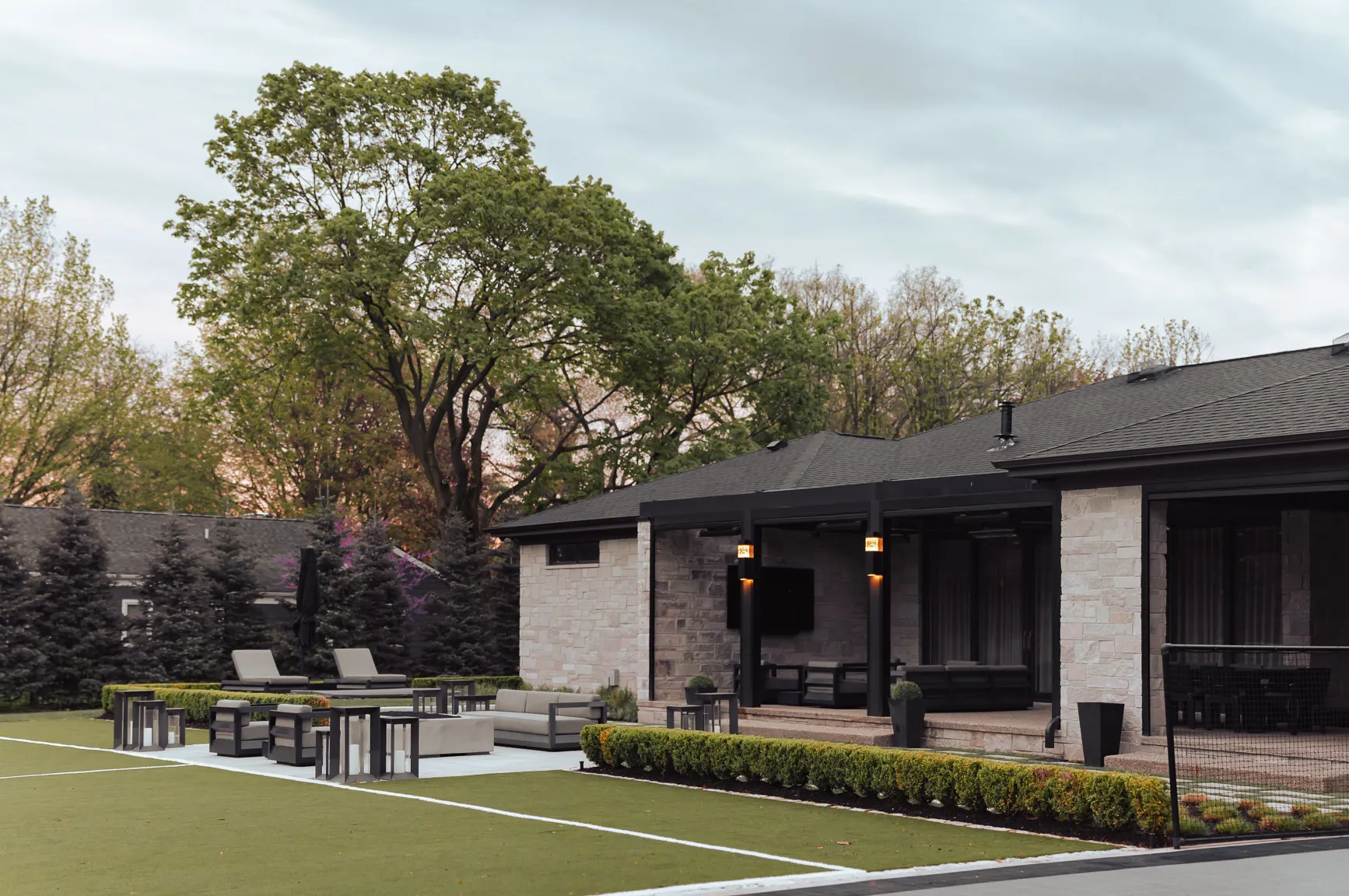
Motorized screens for patios are retractable mesh or vinyl panels that drop down at the push of a button to enclose an outdoor space, then roll up out of sight when you want the open view back. In one system, they deliver on-demand comfort, privacy, and bug and sun protection, which is why so many Michigan homeowners use them to turn a fair-weather patio into space they actually use. This page is our benefits overview and hub: we cover how retractable patio screens work, the core motorized patio screen benefits, and what to look for, then hand the deep dives to detailed guides on cost, heat and glare, weather, and more.
Key Takeaways
- What they are: Retractable patio screens use a motor and side tracks to lower mesh or vinyl on demand, then hide it in an overhead housing when retracted.
- Three core benefits: comfort (heat, glare, and bug control), patio privacy on demand, and usability that adds hours and function to the space.
- Fabric matters: insect mesh maximizes airflow, solar screen mesh cuts heat and glare, privacy mesh blocks the view, and clear vinyl seals against weather.
- Michigan-ready: solar mesh shines in summer; vinyl helps screens withstand Michigan weather and extends the season into cooler months.
- Cost: motorized patio screens typically run about $3,000 to $6,000+ per opening installed — see our Michigan cost guide for details.
- Local install: we install MagnaTrack motorized screens across Metro Detroit and all of Michigan.
What Are Motorized Screens for Patios?
Motorized screens for patios are retractable mesh or vinyl panels that raise and lower with a motor, controlled by a remote, a wall switch, or a phone app. The screen lives in a slim housing mounted overhead, along the front edge of a patio cover or pergola, so nothing shows when the screen is up. Press a button, and the fabric travels down side tracks to the floor to enclose the space; press again and it retracts out of sight, leaving a clear, open view.
The on-demand functionality is what sets these apart. Fixed screens are always there, blocking the view whether you want them down or not. Manual roll-down screens have no motor and no automation, so you crank each one down by hand. Motorized retractable screens give you the enclosure only when you ask for it, and the reasons homeowners add motorized screens to a patio sort into three buckets: comfort, privacy, and usability.
Motorized Patio Screen Benefits at a Glance
The value of a patio screen comes down to matching a real problem to the way the screen solves it. This matrix maps each core benefit to the mechanism behind it and the everyday problem it fixes.
| Benefit | How It Works | What It Solves |
| Comfort — heat & glare | Solar screen mesh filters UV and cuts radiant heat while airflow still passes through | Hot, glaring afternoons that chase you indoors |
| Privacy — one-way view | A tighter weave lowers the openness percentage, so you see out while neighbors don’t see in | Close lot lines and exposed patios that go unused |
| Bugs — mesh barrier | Fine insect mesh blocks mosquitoes and other bugs while letting the breeze through | Evening mosquito swarms and lost dusk hours |
| Wind & rain — season | Screens and clear vinyl turn back wind-driven rain and debris under a cover | Light showers and gusts that end the evening early |
| Usability — season extension | On-demand enclosure adds hours and lets the space do more | Fair-weather-only patios and wasted square footage |
How Do Motorized Patio Screens Improve Comfort?
Motorized patio screens improve comfort by controlling two things that chase people indoors: harsh sun and the bugs that come with it. Real patio screen comfort comes from managing both at once.
Start with the sun and heat. Solar screen mesh is a tightly woven fabric that filters ultraviolet (UV) light, the part of sunlight that fades fabric and heats hard surfaces, cutting radiant heat gain while still letting air through. Think of solar mesh like a pair of sunglasses for your patio: it takes the glare down a few notches while you still see through clearly. A solar screen patio also shields furniture, outdoor TVs, and other outdoor features from UV fade.
Then there are the bugs. In Metro Detroit, mosquito pressure runs heavy from late spring through September, right when the patio gets comfortable. Motorized screens create a barrier that lets the breeze through and keeps insects out, which is why patio screens for bugs and insects earn their keep. The same barrier turns back wind-driven rain and debris, so a light shower that once pushed everyone inside is something a covered patio can sit through.
Exterior shading works because it blocks solar heat before it reaches the space, an approach the U.S. Department of Energy’s Energy Saver and the PNNL Building America Solution Center both flag as a smart way to control heat and glare. For how much a screen actually cuts, see our guide to reducing heat and glare.
Do Motorized Patio Screens Work Year-Round in Michigan?
They can stretch your patio season well past summer, though true year-round use depends on the screen type.
Solar mesh is built for airflow and shade, best in the warm months. Vinyl screens seal the opening more completely and help regulate temperature, keeping a covered patio or three-season porch usable deeper into fall and on milder spring days. Michigan weather rarely sits still, which is why that flexibility pays off.
Vinyl will not make an open patio a heated sunroom in January, but it buys more months of real use than a fixed screen. For four-season outdoor living, vinyl screens are where most Michigan homeowners look to extend the patio season.
Can Motorized Screens Add Privacy to a Patio?
Short answer: Yes, and for many homeowners, it turns out to be the benefit they value most.
Plenty of Michigan neighborhoods sit on close lot lines, putting your patio in easy view of the neighbors, and that exposure is a reason patios go unused. Motorized patio screens give you privacy whenever you want it.
It comes down to the openness factor; the percentage of open space in the weave. A lower openness percentage means a tighter weave that blocks more of the outside view, while you still see out. Options run from solar mesh that softly filters what neighbors see to denser fabrics that create a near-opaque wall. Because the screens are motorized, privacy is on demand: lower them for a quiet evening, retract them when you want the yard back.
What Screen Fabric Is Best for Patio Privacy?
The best fabric depends on what you want privacy to do. Three categories cover most patios:
- Solar mesh: Filters sunlight and softens the outside view while keeping your own sightlines clear. Best for shade and partial privacy without closing the space off.
- Denser privacy mesh: A tighter weave that acts as a near-solid visual barrier. Best when blocking the view entirely is the priority, like a hot tub or a patio on a busy street.
- Clear vinyl: Seals the space against wind and rain without cutting off the view. Best when weather protection matters more than visual privacy.
No single fabric wins. The one for a poolside lounge differs from a dining area facing the neighbors, and a good install often mixes types across openings.
Mesh and Fabric Options
Patio screen fabric falls into four families, and the right one depends on whether you’re chasing airflow, shade, privacy, or weather sealing. Two numbers do most of the work when you compare them: the openness factor (how much of the weave is open space, which drives airflow and view) and UV block (how much solar radiation the fabric stops).
The table below is a starting point — actual specs vary by fabric line.
| Fabric Type | Openness | UV Block | Best For |
| Insect mesh | Higher openness — most airflow and clearest view | ~30–50% | Bug screens for patio use where breeze and a clear view matter most |
| Solar mesh | Lower openness — tighter weave | ~80–95% | Cutting heat and glare with partial, one-way privacy |
| Privacy mesh | Very low openness — near-opaque | ~90%+ | Patio privacy screens where blocking the view is the priority — hot tubs, busy streets |
| Clear vinyl | Sealed — no weave openness | Minimal — a weather seal, not a UV filter | Weather sealing and warmth without losing the view |
Many patios end up mixing types across openings, solar screen mesh on the sun-facing side, privacy mesh toward the neighbors, and clear vinyl where wind and rain come in.
How Do Motorized Screens Make a Patio More Usable?
Retractable screens change the outdoor usability of a patio in three ways: they add hours, expand what the space can do, and take the effort out of running it.
- Extended hours: Lower the screens at dusk, and you reclaim the evening hours when mosquitoes usually drive you indoors. A patio that used to clear out at sundown stays in play.
- Expanded function: A screened patio stops being a fair-weather spot and starts working as real square footage: a summer dining room, a shaded home office, or a play space where the kids stay put, and the bugs stay out.
- Smart home integration: Modern systems tie into home automation, lowering on a schedule when the afternoon sun hits or when a wind sensor reads a gust. That kind of motorized screen smart home integration is convenience you set once and forget.
Large Michigan patios and pergola openings often run wider than a single standard screen, forcing seams or center posts. Higher-end motorized screens are engineered for these spans, so a wide pergola or covered patio gets covered cleanly.
Is a Motorized Patio Screen Worth the Investment?
For most Michigan homeowners who barely touch their patio outside of peak summer, the math tends to work out.
The clearest return is space. Motorized screens add usable square footage without the cost, permits, and disruption of permanent construction, making the outdoor room you already paid for usable for more of the year.
Buyers notice well-designed outdoor living upgrades, so a quality screen system may add to resale value. Treat that as a bonus rather than a guarantee, since it depends on the buyer and market.
Durability is where premium and budget systems part ways. A cheap screen saves money up front, then nickel-and-dimes you in service calls when the fabric jams, sags, or blows out of track. When you compare quotes, the real benefits of a retractable patio screen show up in the details.
For ROI, the comparison is a full enclosure: a sunroom or three-season addition costs far more. Motorized screens cost a fraction of that and deliver much of the same lifestyle gain: shade, bug protection, privacy, and more usable months.
What Should You Look for in a Motorized Patio Screen System?
A few specifications separate a premium motorized screen system from a commodity one, and they decide whether you’re happy with it in five years:
- Wind rating: How much wind a motorized screen takes before you must retract it. Wind protection is the biggest gap between systems.
- Maximum screen width: How wide a single screen spans before you need extra panels or center posts.
- Track design: Older zipper-style tracks are the common failure point. Zipper-free designs avoid that weak spot.
- Installation options: Surface-mounted hardware shows; a recessed install hides the housing and side tracks.
- Smart home compatibility: Whether it works with home automation, sensors, and app or voice control.
- Warranty depth: How long the aluminum, fabric, and motors are actually covered.
This is where it makes sense to name the system we install. For motorized screen projects, Skyview builds with MagnaTrack motorized screens, for reasons that align with that checklist.
MagnaTrack screens are rated to a standard 75 mph wind rating, while most competing systems handle around 25 mph. That changes how you use them: instead of raising the screens in a storm, you lower MagnaTrack screens to shield the covered space below. MagnaTrack also engineers a single screen up to 30 ft wide, enough to cover large patio and pergola openings common on Michigan homes, with no center seam or post.
The track is the part homeowners never see but feel every day. A patented, zipper-free magnetic self-tensioning system that uses rare-earth magnets to hold the fabric taut and self-correct after wind or a bump, removing the jam-prone zipper behind most service calls. The screens are smart-home compatible and can be recessed for a hidden finish.
The warranty backs it up: limited lifetime on the aluminum, 15 years on the screen fabric, and 5 years on the motors. Skyview installs MagnaTrack screens across all of Michigan, from Metro Detroit through the surrounding counties, often as one piece of a larger outdoor living plan alongside a StruXure louvered pergola.
Skyview can walk your patio with you and talk through openings, fabric, and use. Set up a free consultation to learn more about MagnaTrack screens.
Frequently Asked Questions
How Much Do Motorized Patio Screens Cost?
Motorized patio screens typically run about $3,000 to $6,000+ per opening installed, depending on size, fabric, motor and sensor options, and mounting. For a full breakdown, see our guide to motorized screen cost in Michigan (https://skyviewusa.com/blog/motorized-screens-cost-mi/).
Do Motorized Patio Screens Keep Bugs Out?
Yes. A motorized screen lowers a fine insect mesh across the opening and seals along the side tracks, so mosquitoes and other bugs stay out while the breeze still comes through. Bug protection is one of the top reasons Michigan homeowners add patio screens, given how heavy mosquito pressure runs from late spring through September.
Can You See Through Motorized Patio Screens?
Usually yes, from the inside out. It depends on the fabric’s openness factor: solar mesh keeps your sightlines clear while softening the view in, and denser privacy mesh blocks the outside view almost entirely. Clear vinyl leaves the view fully open. Because the screens are motorized, you can lower them for privacy and retract them for a wide-open view.
Do They Work Year-Round in Michigan?
They extend the season more than they deliver true winter use. Solar mesh is best in the warm months for shade and airflow, while clear vinyl seals the opening and helps hold heat, keeping a covered patio or three-season porch usable deeper into fall and on milder spring days. Vinyl won’t make an open patio a heated sunroom in January, but it buys far more usable months than a fixed screen.
How Much Heat and Glare Do They Block?
Solar screen mesh blocks a large share of UV and cuts radiant heat gain while still letting air through, which takes the glare down and keeps hard surfaces cooler. Exterior shading is effective because it stops solar heat before it reaches the space, an approach the U.S. Department of Energy recommends.


