

Can Motorized Screens Handle Wind, Rain, Snow, and Harsh Weather in Michigan?
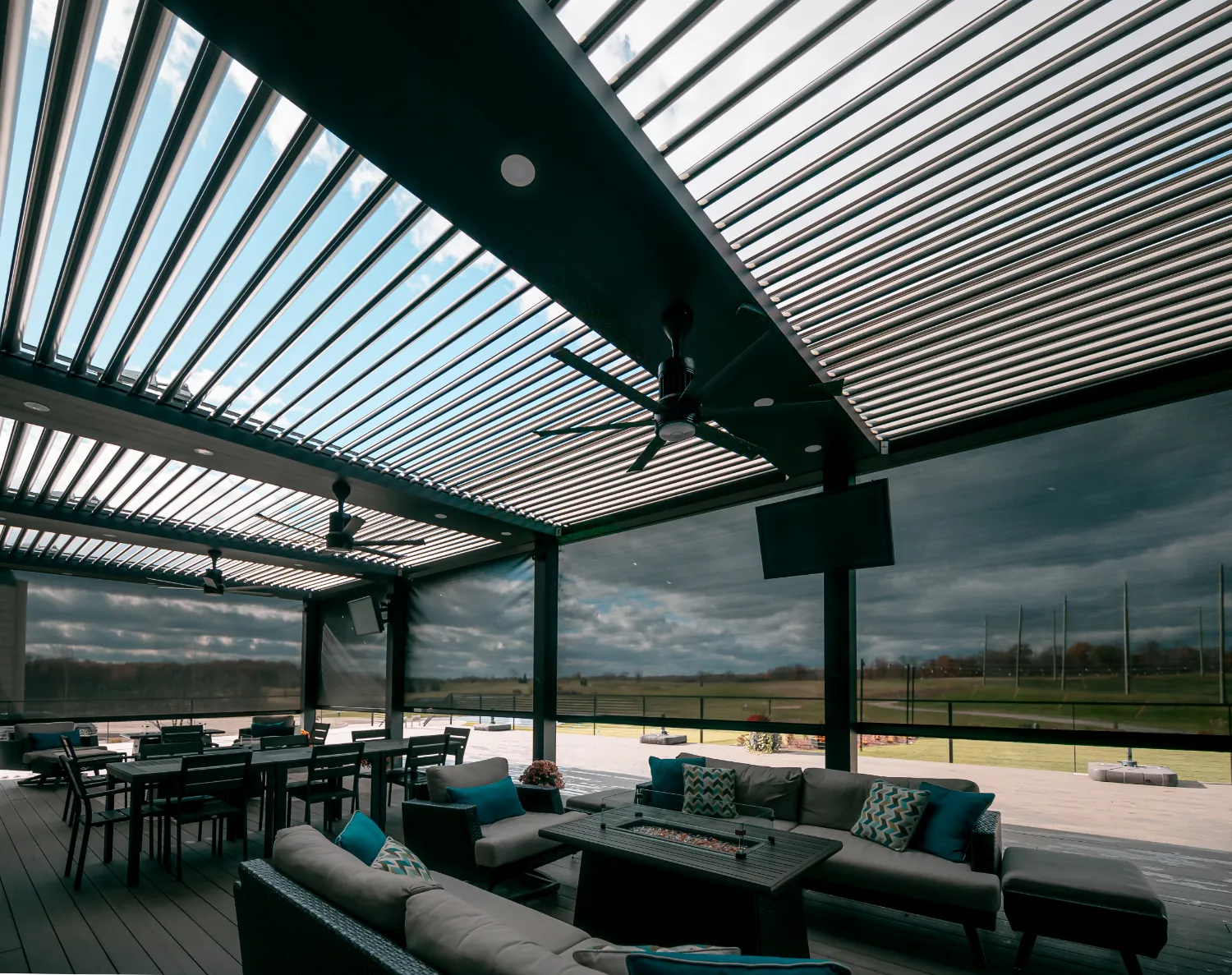
Yes. A quality motorized screen can handle wind, rain, snow, and harsh weather in Michigan, as long as it was engineered for it and runs the way it was meant to be. That second part matters more than most homeowners expect, which is why answering whether motorized screens can handle wind, rain, snow, and harsh weather in Michigan takes more than a marketing label.
Michigan throws a full four seasons at any outdoor product, often in the same month. So before you put money into motorized patio screens, you should know exactly how they hold up against lake-effect snow, storm-season gusts, freeze-thaw swings, and driving summer rain.
We have you covered with this guide so you can make the right call throughout the process. Stick around for all the details.
What Kind of Weather Do Michigan Motorized Screens Actually Need To Handle?
Pretty much all of it. Michigan weather poses several challenges, spread across the calendar.
Heavy lake-effect snow rolls off Lake Michigan through the cold months, and the broader Great Lakes effect reaches communities near Lake Erie and Lake St. Clair on the east side of the state. Storm season brings wind gusts that regularly top 50–60 mph.
Winter and early spring run the temperature up and down through freeze-thaw cycles, and every cycle puts steady stress on any mechanical part. Summer adds fast-moving thunderstorms with driving rain. Across the whole warm season, UV exposure keeps working on fabrics and finishes, day after day.
That mix of weather is why spec-shopping matters more here than in a milder climate. When you compare motorized screens for Michigan weather, the spec sheet tells you far more than how a screen behaves on a calm afternoon somewhere down south. A screen that shrugs off an easy spring day can still fail on a windy February afternoon in Metro Detroit. The wind rating, the materials, and the hardware separate the systems that last from the ones that quit by year two.
Why Michigan Weather Is Harder on Outdoor Products Than Most Homeowners Expect
If you have lived in Michigan for a while, you already know the pattern. A warm, bright Saturday gives way to a 40-degree drop and a wind advisory by Monday. Snow piles up, melts, refreezes, and piles up again. Every one of those swings is a small stress test, and products built only for summer tend to show their weakness fast.
This is the honest reason to be skeptical of “weather-resistant” claims. Plenty of cheap patio products carry that label and still warp, tear, or jam after one real Michigan winter. Your skepticism is earned, and it is exactly why the specifics in the rest of this guide are worth reading.
How Are Motorized Screens Engineered To Handle Wind and Rain?
A well-built motorized screen handles wind and rain through engineering, not luck. What separates a lasting system from a flimsy patio curtain is how the screen sits in its track and what it is made of.
The MagnaTrack system is built around a patented magnetic track. Instead of locking the screen into a rigid zipper or fixed channel, the track uses rare-earth magnets that let the screen flex inward under wind pressure and then pull itself back into alignment once the gust passes. Think of it like a tall tree in a storm: it bends with the wind and springs back instead of snapping. That flex is what lets the screen absorb pressure rather than tearing or blowing off track.
On the numbers, standard models carry a MagnaTrack wind rating of up to 75 mph, which sits well above most competing motorized screen systems. That same design is where motorized patio screens get their wind resistance, and the build backs it up: reinforced borders, powder-coated aluminum housings, and stainless steel hardware give these motorized screens harsh-weather durability that holds up through repeated deployment cycles, year after year.
One detail tends to surprise people. During a storm, these screens are meant to be lowered, not raised. Sending the screen down puts a protective barrier across the opening and shields the covered patio from wind-driven rain. Raising it would leave the space exposed and bunch the fabric in its housing. Proper deployment is part of how the system protects your space, which is why professional guidance on when to lower and when to retract matters.
What Happens to a Motorized Screen During a Michigan Thunderstorm?
Picture the scenario. A summer storm builds over the area, and you can see it coming. You lower the screen across the patio opening. As the wind hits, the magnetic track lets the screen give slightly and self-correct, so wind-driven rain stays out, and the fabric stays intact. The covered space behind it stays usable while the storm passes. That is the kind of storm protection patio screens in Michigan have to deliver.
For homes in lake-facing or high-exposure spots, there is a stronger option. The Defender Hurricane Series uses a Kevlar-style woven fabric engineered for sustained storm-force winds well beyond the standard model, with higher ratings available for storm-prone applications. Most Michigan patios will never need that level of protection. But if your property sits open to the wind off a lake, it is worth asking about.
Can Motorized Screens Stay up Through a Michigan Winter?
Short answer: The system stays up through winter, though the vinyl fabric is best retracted during the harshest stretches. There is a real difference between surviving winter and being used through winter.
The housing, tracks, and Somfy motor are built to withstand Michigan’s temperature extremes. They sit outside all year without trouble. The recommended practice is to retract vinyl screens before extended periods of heavy ice accumulation and sustained high winds, since those are the two real risks to the fabric over a long winter. Through the shoulder seasons, late fall and early spring, the screens handle Michigan conditions without issue.
Vinyl screens in particular are built for year-round use. They keep a covered patio or pergola comfortable well into late fall and on milder winter days, which is what makes outdoor screens worth running through a Michigan winter rather than treating them as a summer-only splurge. When a screen is paired with a louvered pergola, the structure overhead adds protection too. A StruXure pergola, for example, is snow load rated at 50 pounds per square foot, so the cover carries serious winter weight, while the screens close in the sides.
Do Motorized Screens Require Seasonal Removal or Winter Teardown?
No. There is no seasonal teardown and no removal. The maintenance routine is short. Retract the vinyl screens during sustained severe weather, clean the tracks in the fall, and inspect the hardware. That is the whole list.
This is where the magnetic design pays off again. The patented floating magnet system prevents the freeze-jamming problems that plague zipper-style screens, where ice locks the fabric into a rigid channel and the motor strains against it. Because the MagnaTrack screen floats rather than zips, retractable screens handle Michigan snow and ice far better than zipper systems, which seize up when water freezes in the channel. You are not climbing a ladder every November to take anything down.
What Screen Type Is Right for Michigan’s Mixed-Weather Climate?
Most homeowners shopping for four-season outdoor screens in Michigan are choosing between two screen types, and the right pick depends on what you want the space to do.
Solar mesh screens: These are the warm-season workhorse, ideal from spring through fall. They block UV rays and insects, let air move through the mesh, and handle wind well. What they do not do is create a full weather seal, so treat them as shade and bug control rather than an enclosure.
Clear vinyl screens: This is the four-season option. Vinyl creates a full weather barrier against wind, rain, cold air, and debris, which turns a covered patio into a usable room on cold days. Think of it as a removable storm window for your patio. By blocking drafts, vinyl also keeps patio heaters working effectively instead of fighting the wind, and it can stretch comfortable evenings into November or December on mild days. If your goal is year-round outdoor living in Michigan, vinyl is the screen that gets you there.
If you are not sure which type fits your space, that is a normal place to be. The screen that is right for one patio is wrong for the next, and the Skyview team will walk you through the trade-offs before you commit.
Why Skyview Is the Right Partner for Michigan Motorized Screen Installation
Skyview installs MagnaTrack screens across all of Michigan, with crews based in the Detroit metro area and the surrounding counties. We build every project to fit the opening, with custom screens sized to any space up to 30 feet wide and 20 feet tall. That covers everything from a small back porch to a wide restaurant patio.
Our process starts with a no-pressure design consultation, moves to a custom 3D rendering so you can see the finished space before anything gets built, and runs on committed timelines so you always know what comes next. Whether you are in Detroit, Ann Arbor, Grand Rapids, or up north, MagnaTrack Michigan installs are what we do.
If you are ready to plan a four-season outdoor space that stands up to real Michigan weather, contact us today to set up a free consultation and find out more about motorized screens for your home.


