

Can a Pergola Be Built Over a Fire Pit?
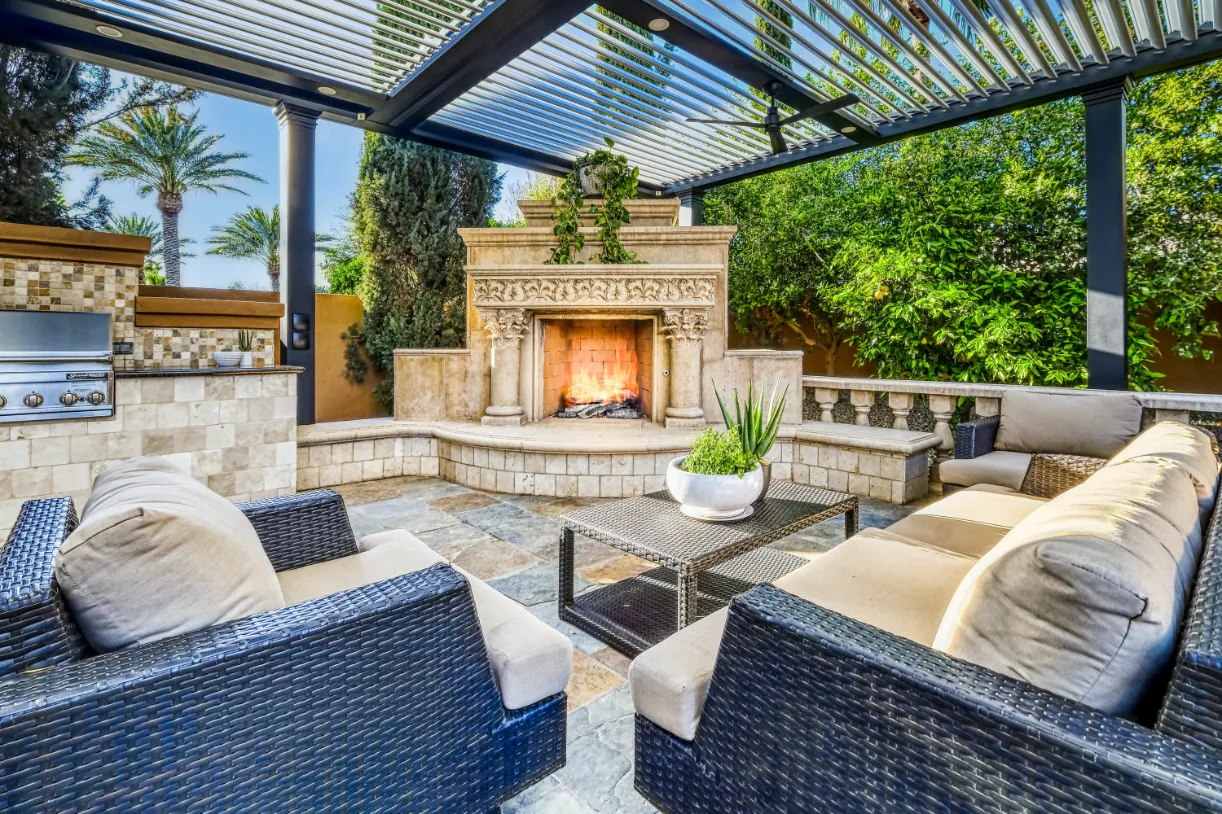
A backyard fire pit adds real warmth to an outdoor space, and a pergola gives that space structure and year-round shelter. For Michigan homeowners sorting through pergola fire pit ideas that hold up in local weather, it is a natural pairing. Can a pergola be built over a fire pit safely, or does the heat and smoke create risks worth worrying about?
The good news? Yes, it can be done, and it is more common than most people realize. The right materials, proper clearance, and a few practical precautions make the combination work. This guide walks through the exact criteria — material, clearance, fire pit type, ventilation, and local code — so you can plan it correctly from the start.
Key Takeaways
- Yes — a pergola can be built over a fire pit safely when the material is non-combustible and clearances are respected.
- Keep at least 10 ft of vertical clearance above the fire pit and a 3–5 ft buffer between the flame and any seating or columns.
- Aluminum is the best pergola material for fire features; vinyl is not recommended over an open flame.
- Gas and propane fire pits are the most pergola-friendly; wood-burning pits need more clearance, a spark screen, and stronger ventilation.
- Always confirm local fire ordinances, permits and HOA rules in your Michigan municipality before you build.
Is It Actually Safe To Put a Fire Pit Under a Pergola?
Short answer: Yes, with the right setup, a fire pit under a pergola is safe and manageable.
Pergolas, especially those with open or adjustable roofs, provide natural ventilation. Heat and smoke rise and escape rather than collect under the structure. The two variables that matter most are the material your pergola is built from and the vertical clearance between the fire and the overhead structure. Get both right, and you have a setup that works in Michigan weather without the safety concerns most people assume. The sections below break each criterion down so you can check your own plan against it.
What Pergola Materials Work Best Over a Fire Pit?
Not all pergola materials handle heat the same way.
| Material | Combustible? | Heat behavior | Verdict for a fire pit |
| Aluminum | No | Will not warp or crack; melting point ~1,221°F | Best choice. Powder-coated finish wipes clean of soot. Recommended for any new build with a fire feature. |
| Steel / stainless | No | Very high heat tolerance; melting point ~2,750°F | Safe and strong, but heavier and more prone to rust without coating. Aluminum is the lighter, lower-maintenance pick. |
| Wood | Yes | Dries out, absorbs smoke; untreated pine ignites near 450°F | Workable only with extra clearance, a spark screen and a Class A fire-rated finish. Not ideal directly over a flame. |
| Vinyl | Softens | Discolors and warps under sustained heat | Not recommended directly over an open flame; not rated for that exposure. |
For a new build, aluminum is the clear material choice when a fire pit is in the plan.
If you want the full picture on how aluminum stacks up against steel across durability, maintenance, and long-term cost — not just for fire pit applications but for any pergola build in Michigan — our detailed steel vs. aluminum pergola comparison covers all of it.
What Height and Clearance Does a Pergola Need Over a Fire Pit?
Plan for at least 10 feet of vertical clearance between the fire pit surface and the overhead structure.
10 feet is the standard starting point, but fire pit pergola height requirements can vary by municipality, so treat that number as the floor, not the final word. A gas fire pit pergola with a controlled, low flame needs less buffer than a wood-burning pit with a variable flame height.
Clearance is not only vertical. As a practical rule, keep a 3 to 5 ft horizontal buffer between the flame and any seating, support column or combustible surface, and many gas manufacturers specify their own minimums — for example, a standard 200,000 BTU gas burner is commonly rated for roughly 36 inches horizontally from the burner pan to anything combustible and around 84 inches of overhead clearance. Higher BTU output means more required clearance, which is why the fire pit’s size and fuel type should be settled before the pergola height is finalized.
Before you build, confirm the exact pergola-fire pit clearance rules with your installer and the local municipality.
Does It Matter What Kind of Fire Pit You Use?
Yes. The type of fire feature affects how much clearance, ventilation, and upkeep your pergola setup will need:
| Fire pit type | Sparks / embers | Smoke | Best for a pergola? |
| Gas | None | Minimal | Most compatible. Consistent flame height, clean burn, shuts off instantly if conditions change. |
| Propane | None | Minimal | Shares most gas advantages. Trade-off is storing and managing the portable fuel source. |
| Wood-burning | Yes | High | Most ambiance, but needs extra clearance, a spark screen and reliable overhead ventilation. |
| Electric | None | None | Worth considering for fully enclosed setups or spaces where an open flame is not practical. |
Is a Louvered Pergola Better Than an Open-Beam Pergola for a Fire Pit?
Both can work. An open-beam pergola provides good passive ventilation by design. A louvered pergola, which uses adjustable roof slats that rotate to control sunlight, airflow, and rain protection, goes further.
When the louvers are fully open over an active fire, they draw heat and smoke upward the way a chimney does. When the fire is out and rain moves in, the louvers close to seal the space against the weather. That makes it a stronger design choice for a fire pit setup.
And if you’re still earlier in the planning process — deciding between different types of outdoor structures altogether — it’s worth understanding how a pergola differs from an arbor and what each one is actually designed to do. Our arbors vs. pergolas guide covers those distinctions clearly before you commit to a direction.
What Safety Precautions Should You Follow?
A few practical steps cover most of the risk. Check local fire ordinances before you build, since municipalities across Michigan vary on open flame rules for covered structures. Keep the fire pit centered under the pergola and clear of support columns. Use fire-resistant furniture or maintain a safe distance between seating and the flame. Avoid hanging lights or decorative elements directly over the fire. Keep a fire extinguisher accessible at all times, not stored in the garage.
For the underlying standard, the National Fire Protection Association outlines general guidance on outdoor open-flame safety and spark control.
Following these steps from the start is far easier than correcting problems after installation.
A simple hardscape detail also helps: set the fire pit on non-combustible pavers or stone rather than directly on a deck or grass. If you are still finalizing the base, our pavers and stamped patios page covers fire-safe surface options.
Do You Need a Permit for a Fire Pit Under a Pergola in Michigan?
Often, yes — and it depends on where you live. Many Michigan municipalities require a permit for a permanent fire feature or for a covered structure over an open flame, and some set their own minimum clearance from the house and property lines. Before you build, confirm three things: your local fire ordinance and building code (referenced through the International Code Council model codes most Michigan jurisdictions adopt), any homeowners association rules, and your homeowner’s insurance policy, since adding a fire feature can affect coverage. Gas line work in particular should be done by a licensed professional and typically requires an inspection.
How Does Skyview Build Pergola Spaces Designed for Fire Features?
Skyview is Michigan’s premier outdoor living design and build firm, built for exactly this kind of project. Skyview installs StruXure pergolas, including the Cabana X model, which is purpose-built for this application.
The Cabana X is built from aluminum, which is non-combustible, heat-resistant, and low-maintenance, with a motorized louvered roof (slats that open and close via remote or app) that opens over an active fire and closes when the weather turns.
Every Skyview installation is backed by a 100% lifetime warranty, and the team manages the design, engineering, and installation so you never have to guess at clearances or local code requirements.
Contact us today to schedule a free consultation and learn more about StruXure pergolas.oward a StruXure pergola built for your space.
Frequently Asked Questions
Can you put a fire pit under a covered pergola?
Yes. A pergola is not a fully enclosed structure, so heat and smoke still vent upward — especially with an open-beam or louvered roof. The keys are a non-combustible material, at least 10 ft of vertical clearance, and a gas or propane fire pit for the cleanest, safest burn.
How high should a pergola be over a fire pit?
Plan for a minimum of 10 ft of vertical clearance from the fire pit surface to the roof, and go higher (12–15 ft) for a wood-burning pit. Local code and the fire pit’s BTU rating can raise that minimum, so confirm with your installer.
What is the best pergola material for a fire pit?
Aluminum. It is non-combustible, will not warp or crack from heat, and its powder-coated finish wipes clean of soot. Steel is also non-combustible but heavier; wood needs extra precautions; vinyl is not recommended over an open flame.
Can you use a wood-burning fire pit under a pergola?
You can, but it requires the most care: extra vertical clearance, a quality spark screen, strong overhead ventilation, and a non-combustible pergola material. Gas or propane is the lower-risk choice under a covered structure.
Do you need a permit for a fire pit under a pergola?
Often yes, depending on your municipality. Many Michigan jurisdictions require permits for permanent fire features or covered structures over a flame, and may set clearance rules from the home and property lines. Always check local fire and building codes plus any HOA rules first.
Is a gas or propane fire pit better under a pergola?
Both are excellent for covered structures because they produce no embers and burn clean. Natural gas is convenient for a permanent install on a gas line; propane is portable but requires fuel storage and management.


