

Steel vs Aluminum Pergolas: Pros And Cons
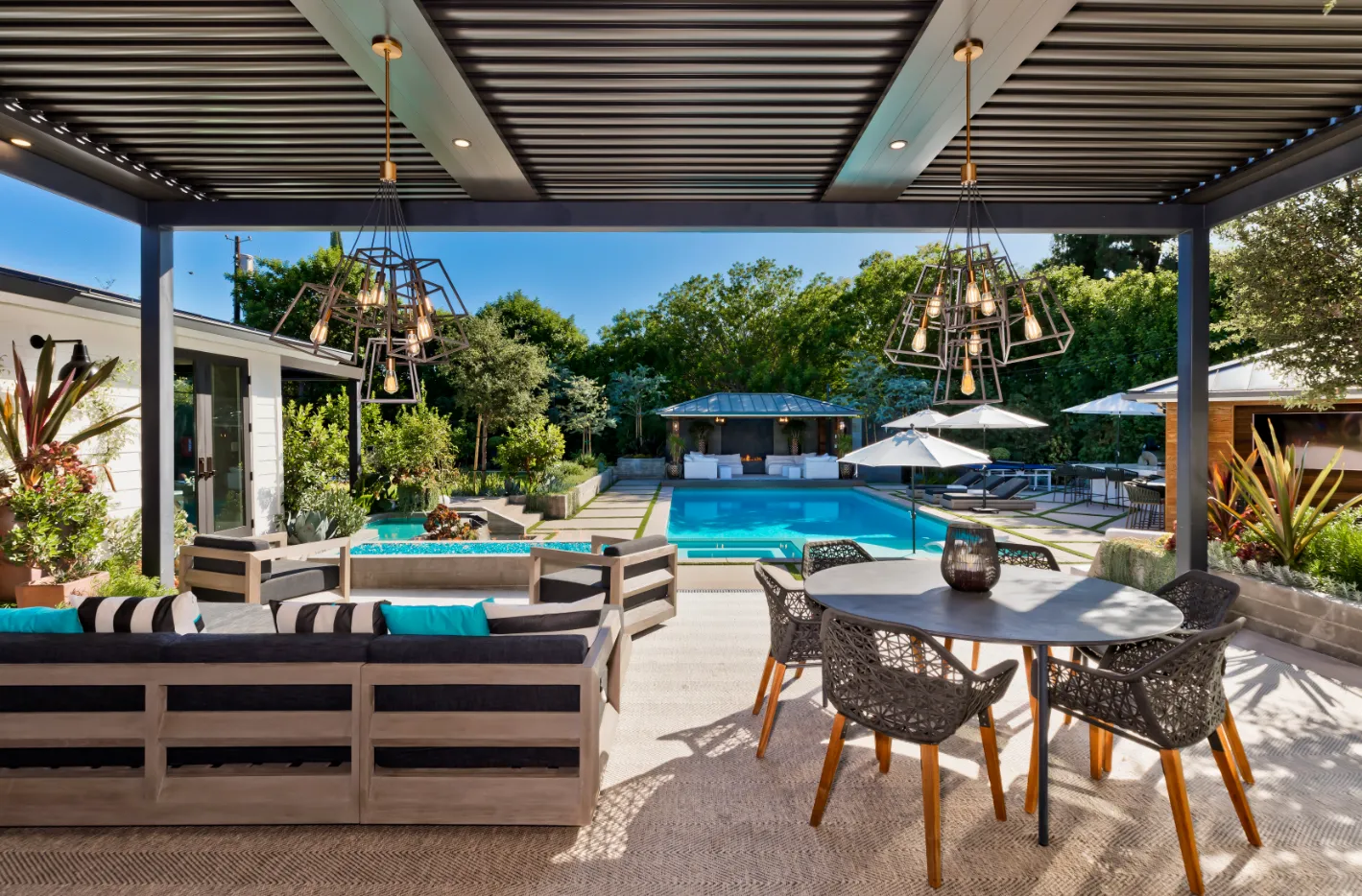
You’ve decided a pergola is the right move for your backyard. Now comes the part that trips up most homeowners: what should it be made of? The steel vs aluminum pergolas debate comes up often, and the differences are real, particularly when you factor in Michigan’s climate, maintenance, and total cost of ownership.
We have you covered with this guide so you can make educated choices throughout the process. Stick around for all the details.
How Do Steel and Aluminum Pergolas Compare in Strength and Weight?
Steel has higher raw tensile strength, but aluminum’s strength-to-weight ratio makes it the better-performing material for most residential pergola applications.
Steel is dense and heavy. That works fine for commercial construction and industrial spans, but in a backyard pergola, that weight becomes a problem. Steel pergolas need a heavier foundation, complicated installation, and leave you with fewer design options.
Aluminum weighs roughly one-third of steel, and still delivers the structural performance a residential pergola actually needs. That lighter profile means more installation flexibility and the ability to engineer the complex louvered systems that define modern pergola durability.
Can an Aluminum Pergola Handle Heavy Accessories Like Fans, Heaters, and Screens?
This is where the “lighter means weaker” assumption falls apart. Modern extruded aluminum pergola systems are designed to accommodate integrated accessories such as motors, retractable screens, LED lighting, ceiling fans, and climate-control equipment. Every system ships load-tested and wind-rated.
Which Pergola Material Holds Up Better Against the Elements?
Aluminum holds up significantly better, particularly in climates with humidity, freeze-thaw cycles, and temperature swings.
Steel’s real vulnerability is rust. Once the protective coating on a steel pergola is scratched or worn through, bare iron begins to oxidize, and the corrosion spreads. With lake-effect moisture, winter road salt in the air, and hard freeze-thaw cycling, that process moves faster than most homeowners expect.
Aluminum doesn’t rust. It forms a natural oxide layer when exposed to oxygen, protecting the metal underneath rather than eating it. For homeowners in Metro Detroit, aluminum pergola weather resistance is the practical difference between a structure that holds up and one that gradually fails.
Aluminum’s non-combustible properties also make it the only sensible material choice if a fire feature is part of your outdoor living plan. Our guide to building a pergola over a fire pit gets into the specific clearance requirements and safety considerations — and why material choice is the first decision that determines whether the combination works.
Powder-Coated Aluminum: The High-Performance Finish
A powder-coated aluminum pergola adds a hard, factory-applied finish on top. It resists chipping, fading, and moisture infiltration better than painted steel. Think of it as a second skin bonded to the metal, rather than paint sitting on top waiting to crack.
Aluminum also reflects heat more efficiently than steel. On a hot afternoon, a steel structure absorbs and holds that heat. An aluminum one stays cooler, which makes a difference when people are actually using the space.
How Do Steel and Aluminum Pergolas Compare in Maintenance?
Aluminum wins clearly. A steel pergola requires ongoing attention. An aluminum pergola requires almost none.
With steel, you’re looking at regular rust inspections, touch-up painting wherever the coating shows wear, rust treatment before it spreads, and periodic full repaints as the original finish breaks down. That’s real time and real money, every few years. Skip a cycle, and the problem goes beyond aesthetics. You’re accelerating structural degradation.
Aluminum pergola maintenance is soap and water, once or twice a year. No rust to inspect for, nothing to recoat. You want to be relaxing under your pergola on a Saturday, not scraping and repainting it. That freed-up time and budget can go toward the accessories that actually make the space work, like pergola lighting, sound, and climate control.
Does a Steel or Aluminum Pergola Cost More in the Long Run?
Aluminum may cost more upfront in some contexts, but costs less to own over time.
Steel can look like the cheaper option on paper. But upfront price and total cost of ownership are two different numbers. Steel’s ongoing costs include protective coating maintenance every few years, rust remediation when spots get missed, and a shorter usable lifespan in high-humidity climates. Add those up, and the math changes.
A powder-coated extruded aluminum pergola holds its structural integrity and appearance for decades with minimal upkeep. That’s especially true in Michigan, where outdoor structures deal with real seasonal stress year after year. The pergola material comparison keeps coming back to the same answer: pay for durability once, or pay for maintenance repeatedly.
Which Pergola Material Is the Right Choice for Your Backyard?
For most residential applications, aluminum is the clear choice. Steel has a role in large commercial spans and industrial structures, but for a backyard outdoor living space, it almost certainly doesn’t belong.
For the homeowner who wants a premium, all-season structure, aluminum is the best pergola material. It’s lighter, corrosion-resistant, low-maintenance, and built to carry the accessories that make a pergola genuinely useful year-round.
If you’re still working out whether a pergola is the right structure for your space in the first place — or how it compares to a simpler garden accent like an arbor — our arbors vs. pergolas guide is the right starting point before going deeper on materials.
Skyview installs StruXure pergolas, a fully extruded, powder-coated aluminum system built for all-season performance and smart automation. StruXure’s adjustable louvered roof lets you control sunlight, airflow, and rain protection on demand. The system integrates lighting, fans, heating, and MagnaTrack retractable screens rated to 75 mph wind, all in a structure that needs nothing more than soap and water to maintain.
That’s the real-world answer to the aluminum pergola vs steel question, and it’s what we install for Michigan homeowners who want a structure built for year-round life.
Contact us today to set up a free consultation and find out more about StruXure pergolas.


