

What Type Of Glass Is Best For Sunrooms In Cold Climates Like Michigan?
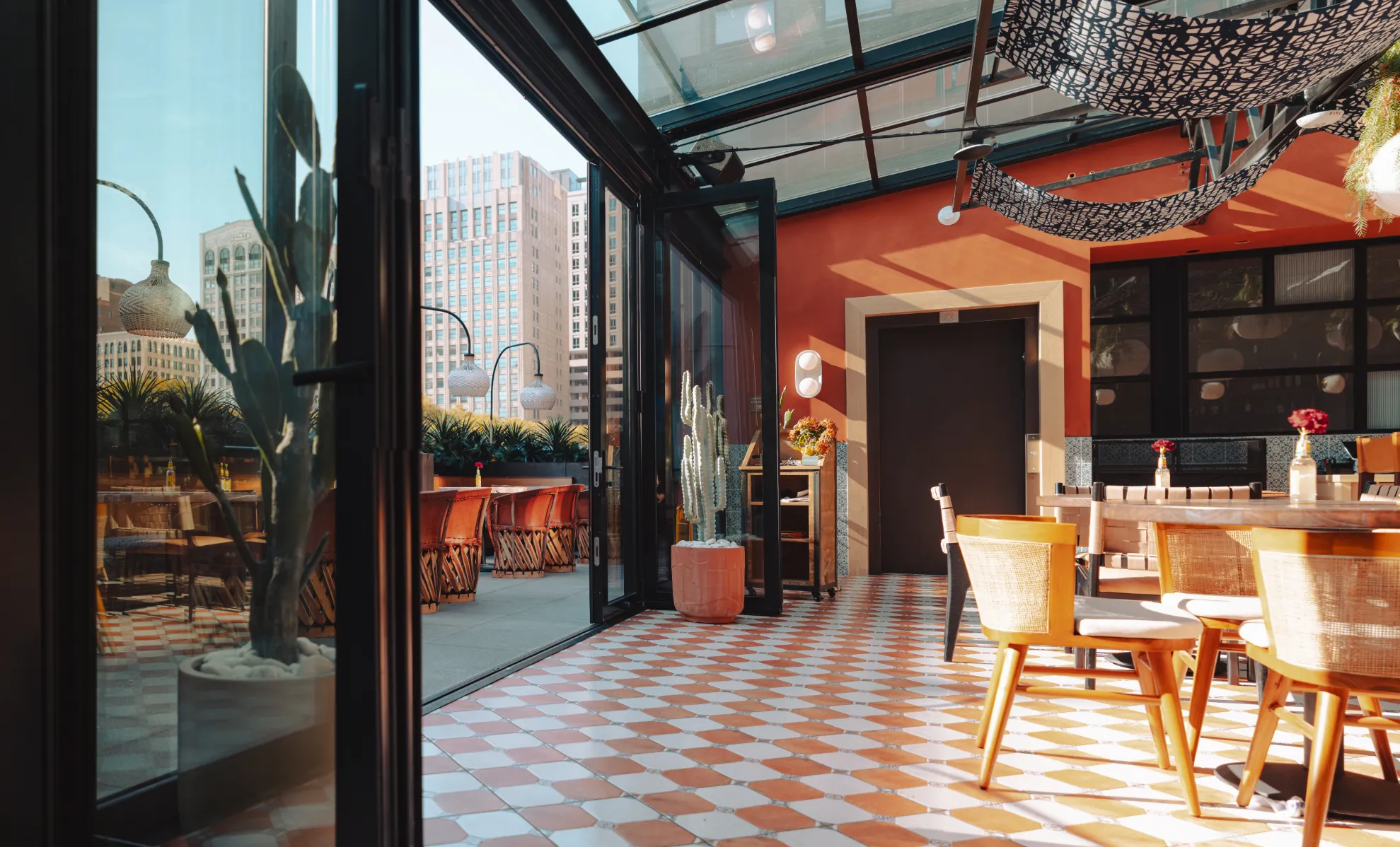
Glass walls. Clean lines. Sunlight pouring in. It’s these stunning results that lead homeowners across Southeast Michigan to add a sunroom in the first place.
But when the cold weather sets in, that’s when performance really gets tested. The same room that felt bright and open in the summer runs cold along the glass, drafty at the seams, and is expensive to heat. The light still comes in, but the comfort doesn’t.
That’s why the search for the best glass for sunrooms in cold climates isn’t only about glass. It’s about how the pane, the gas between it, and the frame around it hold up as one system. Because in a Michigan winter, a weak link anywhere in that chain shows up as a sunroom nobody wants to sit in when the temperature drops.
So let’s break down where every sunroom quote in Michigan starts: with the glass itself, and the rest of the specs that can make or break your space.
What Types of Glass Are Used in Sunrooms?
Sunroom glass comes in four basic configurations, single-pane, double-pane, triple-pane, and low-e coated. Nearly everything else, like coatings, gas fills, and spaces, are layered on top of one of them.
- Single-Pane: One sheet of glass, one thin barrier between indoors and out. It’s the cheapest option, and the worst performer in a Michigan winter. If a quote describes a “glass” sunroom without specifying pane count, this is often what’s underneath.
- Double-Pane: Two panes sealed around a gap of air or gas. The trapped gap is the insulation, while the sealed edges keep it dry.
- Triple-Pane: Three panes and two sealed gaps. More insulation, more weight, and a higher cost.
- Low-E Coated: This isn’t really a separate category, but a treatment applied to any of the glass options above. This microscopically thin metallic layer changes how heat moves through the glass.
Most Michigan sunrooms land on double-pane with a Low-E coating and an argon fill, with triple-pane offered as an upgrade. Whether that upgrade earns its cost depends on the rest of the assembly.
What Makes a Sunroom “Four-Season” Instead of “Three-Season”?
A three-season room is built for spring through fall, which means its glass and framing don’t have to stand up to the worst of winter weather. A four-season sunroom glass system — typically double or triple pane with Low-E, argon, and insulated framing — is engineered to keep the room comfortable all year round, not just in the chilly temperatures of fall.
Why Does Glass Choice Matter More in a Michigan Winter?
In a mild climate, mediocre glass costs you a slightly higher heating bill and a few uncomfortable afternoons. In Michigan, it could cost you the room. Three things happen when glass underperforms in a cold climate.
Heat Escapes Faster
When warm indoor air meets cold glass, it loses its energy. Then, the furnace has to work overtime to replace it. The worse the glass is at insulating, the faster that cycle runs, costing you more and more each year.
Condensation Forms
When the interior surface of a pane drops below the dew point of the air inside, moisture collects on the glass. Left alone through a Michigan winter, that turns into water on the sills, fog between the panes if a seal fails, and eventually staining or rot in the frame.
The Room Feels Cold Even when It’s Warm
A cold surface pulls the heat off your body by radiation. You can sit in a room that reads 70 degrees on the thermostat and still feel a chill because the glass wall beside you is 45. Comfort in a sunroom depends just as much on surface temperature as air temperature.
Double-Pane vs. Triple-Pane Glass: Which is Better For Cold Climates?
The glass decision carries more weight in Michigan than it does in a state with milder winters. That leaves you with two realistic choices: double-pane and triple-pane. The right choice depends less on the glass itself and more on how you plan to use the room.
Here’s how they compare on insulation, cost, and where each makes sense in a Southeast Michigan home.
How Much Insulation Each Option Delivers
R-value measures resistance to heat flow. Higher is better. Single-pane glass sits around R-1. Double-pane with a Low-E coating and argon fill lands roughly in the R-3 to R-4 range, which is much more suitable for harsh winters. Triple pane, when done well, can reach R-5 and up.
What the Upgrade Costs
Triple-pane costs much more than double-pane. It’s heavier, which requires sturdier framing and hardware, and it takes longer to install. In a warmer climate, the return is hard to justify. In Michigan, the math makes more sense for homeowners. Still, it’s a real premium. And it only pays off when the rest of the assembly is built to match.
Where Each Makes Sense
For most Southeast Michigan sunrooms, double-pane with Low-E and argon is the practical sweet spot. The double-pane vs triple-pane glass decision usually comes down to how the room will be used. If it’s a primary living space you’ll heat and occupy daily from November through March, then triple-pane’s extra insulation earns its keep. If it’s more of an occasional retreat, a well-built double-pane unit with the right coatings is the smarter allocation of budget.
The Ceiling on Double-Pane
Even the best double-pane unit has a ceiling. Once you’ve chosen Low-E, argon, and a warm-edge spacer, there isn’t much more performance left to extract from the glass alone. That’s the point where framing quality decides the outcome. A high-performing double-pane unit in a poorly insulated frame performs like a mediocre one.
How Do Low-E Coatings and Argon Gas Fill Improve Winter Performance?
Insulation in a sunroom window comes down to two jobs: keeping warmth from radiating out, and slowing the rate at which it escapes. Low-E coatings handle the first, and gas fill handles the second.
Low-E: A Mirror For Radiant Heat
Low-E coating is a layer of metallic oxide so thin it’s invisible, applied to one surface of the glass. It reflects radiant heat back toward the side it came from — so in winter, warmth generated inside the room bounces back inside instead of radiating out through the pane.
In the warm summer months, the same coating blocks a portion of the sun’s incoming heat, making a Low-E glass sunroom an investment for a year-round ready sunroom.
Argon: Slowing Heat Transfer Between the Panes
The gap between two panes matters as much as the panes themselves. Air is a decent insulator, but argon is denser. And a denser gas slows convection between the panes. Filling that gap with argon instead of ordinary air is one of the least expensive performance upgrades available, which is why argon gas-filled windows are standard in most quality sunroom units, rather than a costly add-on.
Does Frame Material Affect How Well Sunroom Glass Performs?
Does the frame material matter in the sunroom equation? Yes, and this is the part most sales conversations skip entirely.
Why Aluminum Undercuts Good Glass
Aluminum is a superior conductor of heat, which is precisely what you don’t want in a window frame. An aluminum frame creates a continuous path from the cold outside to the warm inside. The frame itself becomes a cold surface, condenses moisture, and radiates a chill into the room, dragging down the performance of whatever glass it holds. Even a triple-pane unit in an aluminum frame can fall short in performance compared to a double-pane unit in a properly insulated one.
What a Thermal Break Does
A thermal break framing system inserts a non-conductive material between the interior and exterior portions of the frame, interrupting the path of the cold air through the metal. It’s a small detail with an outsized effect on how the room feels at the glass line in cold temperatures.
Why Composite Framing Outperforms
Composite framing (vinyl and fiberglass) is an inherently poor conductor of heat, and it doesn’t expand and contract with temperature the way aluminum does. This keeps seals tighter over years of freeze-thaw cycles.
Skyview’s LivingSpace Sunrooms use structurally reinforced composite framing with a thermal break, so the frame reinforces the glass rather than fighting it. That combination is what makes energy-efficient sunroom windows possible in practice, not just on a spec sheet. Glass and frame perform as one system, which is why composite framing with a thermal break matters: it’s the difference between a window that insulates and a wall of glass that actually keeps a Michigan winter outside.
Ready to Choose the Right Glass for Your Michigan Sunroom?
By now, you know the questions worth asking: how many panes, what’s in the gap, is there a Low-E coating, and what’s the frame made of? Those four answers tell you more about winter performance than any sales pitch.
The next step is applying them to your specific project. Everything from your orientation to the sun to how much of the year you want the space usable can play a huge role in your choice of sunroom materials. That’s a conversation, not a decision you have to make alone. Skyview offers a free in-home design consultation where a design expert reviews your space and recommends the right glass and framing, with no pressure or obligation. From there, a custom 3D rendering helps you visualize the possibilities in your home.
If you’re ready to talk through the best glass for sunrooms in cold climates with someone who builds them right here, every season, look no further than Skyview to make your vision a reality. Reach out today to schedule your free consultation, and browse our gallery of Michigan projects to see for yourself what’s possible.


