

Motorized Screens vs. Manual Screens: Which Is Better for Your Outdoor Space?
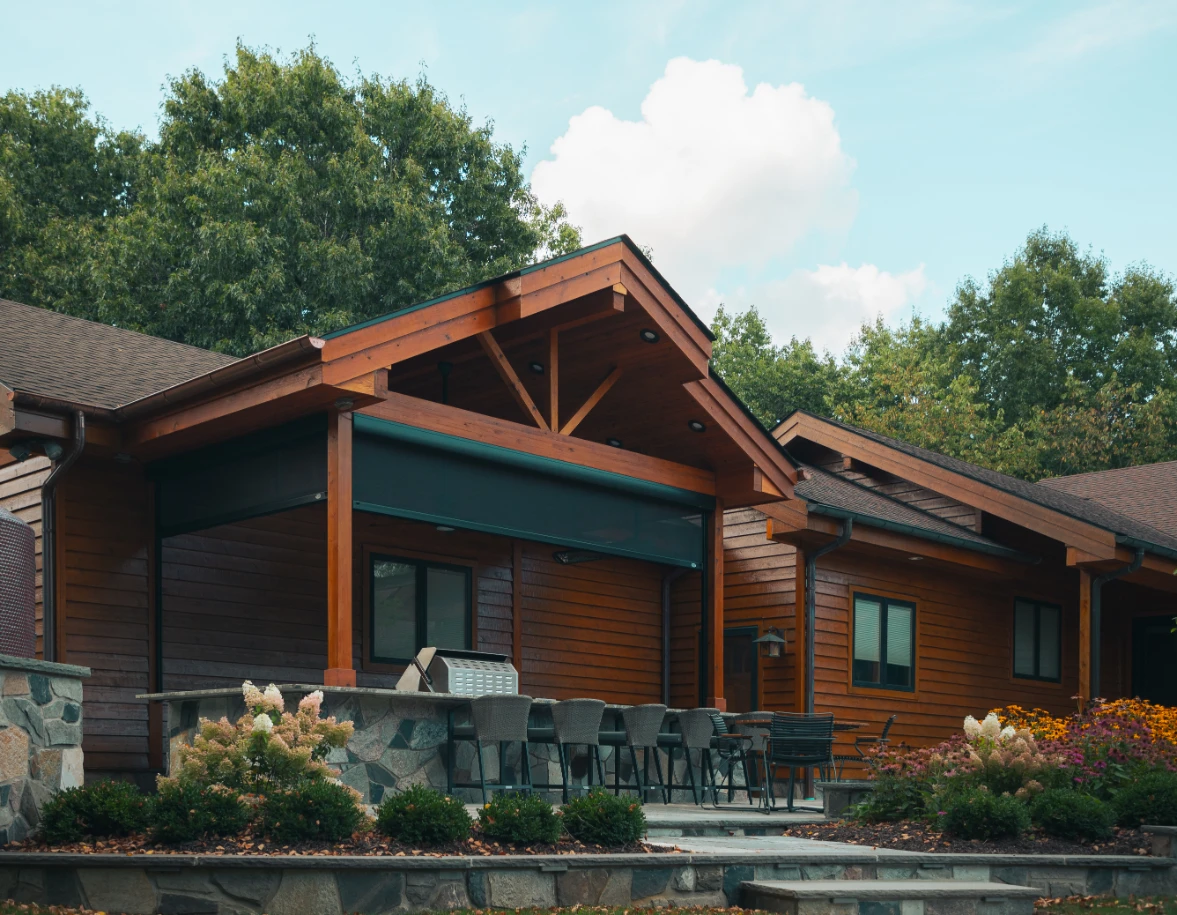
You’re planning out your outdoor space, maybe a covered patio or a louvered pergola, and you’ve started considering motorized screens vs. manual screens. The price gap is real, the spec sheets read like a foreign language, and you want to know whether the extra investment will actually make a worthwhile difference.
This guide will provide the information you need to make educated choices about the best type of screen for your needs. Both do the job in the right setting. The best option depends on the size of your opening, how often you’ll use the screens, and how the rest of your space is built. Stick around for all the details.
What’s the Difference Between Motorized and Manual Outdoor Screens?
Motorized screens deploy at the touch of a button using a tubular motor, while manual screens rely on a hand-pull, cord, or crank. Both can be retractable patio screens, both block insects, and both cut down on harsh afternoon sun.
The two systems also differ in the sizes they support and how cleanly they tuck into a finished pergola or covered patio. Manual screens work well for smaller, standard openings. Motorized retractable screens are built to span wider runs without the strain or wobble a manual mechanism would introduce.
How Do Manual Screens Work vs. Motorized Screens?
Manual screens use a simple mechanical system. You pull a cord, turn a crank, or grab a handle, and the screen rolls down from a housing at the top of the opening. A spring or counterweight holds it in place.
Motorized retractable screens hide a small tubular motor inside that same housing. A wall switch, remote, or smartphone app sends a signal, and the screen lowers or rises with even tension across the full width. Think of it as the difference between rolling up your car windows by hand and pressing a button. Same idea, different daily experience.
Which Type of Screen Is Better for Large or Complex Outdoor Openings?
Motorized screens handle large and complex openings far better than manual systems, which is why they dominate pergola screens and wide patio installations.
Once an opening gets wider than about 10 ft, a manual screen starts to feel like a workout. The fabric gets heavier, the cord pulls harder, and keeping the screen square becomes a fight. That’s especially true when you’re in an area like Michigan, where a covered patio or louvered pergola often spans the full width of a back elevation, sometimes 20 ft or more.
The motor pulls the fabric at a steady speed, the side tracks lock it against the wind, and the screen stays crisp over the long haul. For structures with multiple bays, like a four-bay louvered pergola paired with a built-in outdoor kitchen, motorized operation lets you screen one zone without screening the rest.
How Does Operating Convenience Actually Compare Day-to-Day?
Motorized screens get used. Manual screens often don’t. That one difference is the real lifestyle argument for spending more.
When lowering a screen takes one button press from your couch, you’ll lower it. Bugs biting at dusk, tap a button or a storm rolling in mid-dinner, tap a button. The reverse is true with manual screens. If a cord pull means walking outside and fighting the mechanism, you’re going to skip it more often than not.
Motorized screen smart home integration adds another layer on top. Most quality motorized retractable screens integrate with home automation via Wi-Fi or low-voltage controllers.
You can schedule screens to lower at sunset, raise them in the morning, or use voice control. For Michigan homeowners with multiple screen zones, mobility considerations, or a packed schedule, that’s a real quality-of-life improvement you can feel every time you use the space.
Is the Higher Cost of Motorized Screens Worth It?
For larger spans, frequent use, and integrated outdoor living designs, yes. For small, simple openings used occasionally, manual roll-down screens can be the right call.
Motorized retractable screens cost more upfront because you’re paying for the motor, the upgraded housing, the side tracks, the wiring, and the professional installation those components require — which is reflected in what motorized screens cost in Michigan.
But that premium is spread across a long lifespan, understanding how long motorized patio screens last reframes the cost as a long-term value rather than a one-time expense.
In the motorized screens vs. manual screens discussion, the value question is really about frequency. If you’ve already invested in a louvered pergola with integrated lighting, sound, and climate control alongside an outdoor kitchen, the screens decide whether the space gets used when Michigan’s bug-heavy summer evenings and shoulder seasons hit. Cutting the corner there undercuts the rest of the investment. A smaller covered patio with one standard opening, used a few times a season, is a reasonable place for manual screens.
Which Screen Option Is Right for Your Outdoor Space?
The decision comes down to where the screens fit in your design. Motorized screens make sense when you have:
- Large spans: openings beyond 10 ft
- Frequent use: daily or near-daily screen deployment
- Smart home integration: remote, app, or voice control
- Full design integration: screens built into a complete outdoor living system
Manual roll-down screens are the right pick for smaller standard openings where budget is the primary constraint, or where the screens stand alone as insect protection for a simpler outdoor space.
At Skyview, we design and install MagnaTrack motorized retractable screens as part of a full outdoor living system that fits how you use the space. A screen for a pergola patio works best when it is planned with the pergola from day one. That’s why our process starts with the full space: the StruXure louvered pergola, the integrated lighting and climate control, the outdoor kitchen, and the outdoor living screens that tie it all together.
If you’re weighing outdoor screen options and want to see how MagnaTrack fits into a larger outdoor living plan for your Metro Detroit home, contact us today to set up a free consultation and find out more about MagnaTrack screens and the full Skyview outdoor living system.


