

Motorized Screens vs. Full Patio Enclosures: Pros and Cons
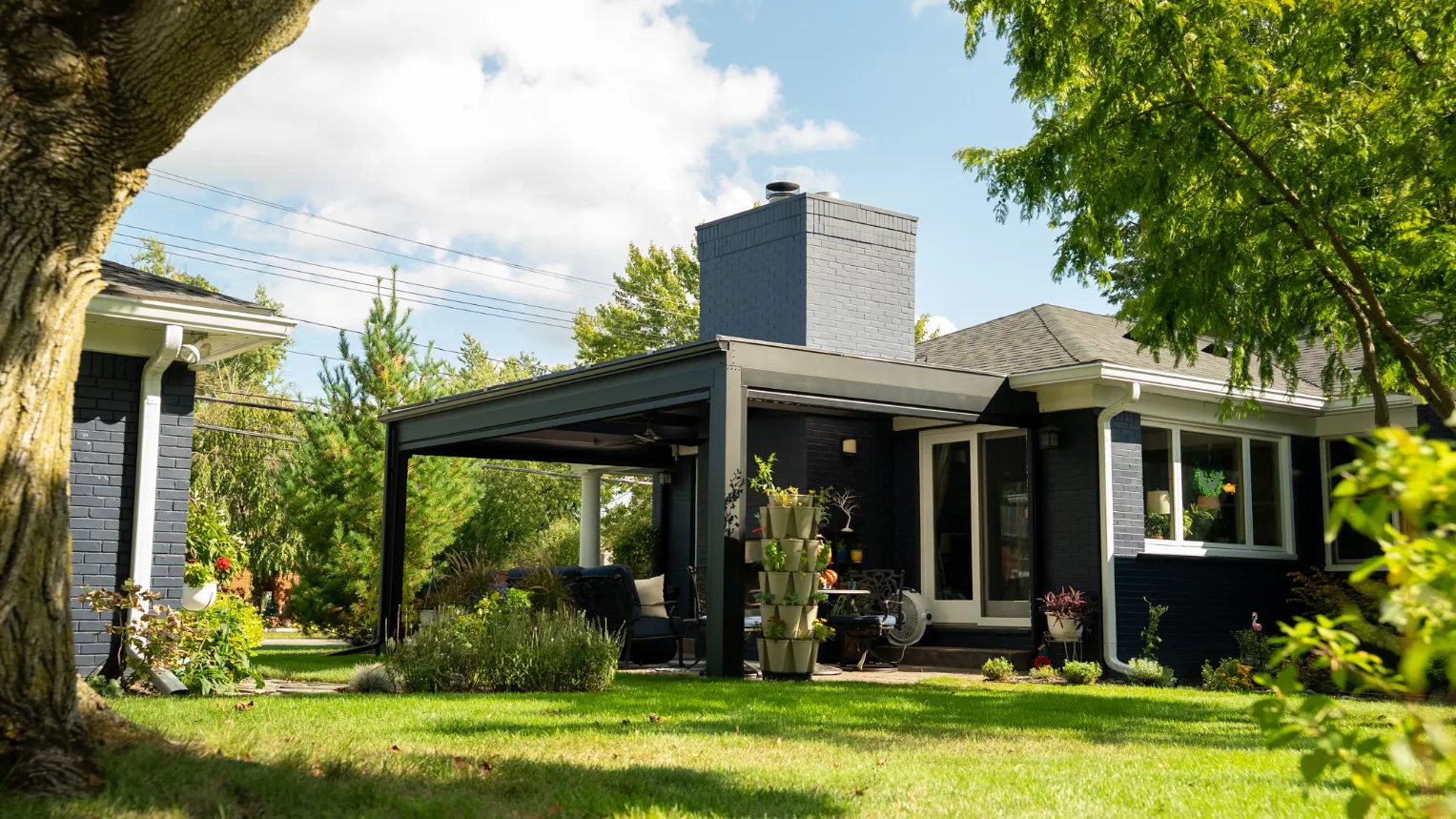
You love your covered patio in June. By late September, the bugs have arrived, the evenings turn cold, and the space sits empty for months. So you hit the question every Southeast Michigan homeowner faces: add screens to what you have, or build a full room?
This guide sets motorized screens vs full patio enclosures side by side: what each does, what it costs, and where it fits. The good news? Once the tradeoffs are clear, the call gets easier. Here’s what you need to know.
What’s the Difference Between a Motorized Screen and a Full Patio Enclosure?
Short answer: Motorized screens add on-demand protection to an open patio, while a full enclosure turns that patio into a permanent, sealed room. Motorized screens are retractable panels that mount into a track around an existing porch, patio, or pergola. They drop at the push of a button to block sun, bugs, and wind-driven rain, then roll back up.
A full enclosure is a bigger move: a sunroom or four-season room with insulated walls, glass, a roof, and heating and cooling. It’s construction that adds square footage. Think of motorized screens like a convertible with a power roof: open air when you want it, cover when the weather turns. A full enclosure is closer to adding a room.
How Does Each Option Handle Michigan’s Four Seasons?
Michigan hands you all four seasons, sometimes in one week, each asking something different of an outdoor space. Motorized screens cover most of that range. Solar mesh cuts UV and glare while keeping airflow in spring and summer.
Vinyl panels seal the sides against wind and rain and hold warmth, stretching a covered patio into late fall and milder winter days. What they do not do is make the space a heated room. A full enclosure is built for that single-digit January night. Insulated glass, framing, and climate control keep a four-season room usable in any weather.
What Are the Pros and Cons of Motorized Screens?
Motorized screens win on cost and flexibility. You keep the patio you like, add protection you control by remote, and skip most of a full build’s disruption. Installation runs in days. Screens have honest limits. They manage the weather; they do not defeat it. A screened patio will not hold 70 degrees in February or add permitted square footage.
- Best for an existing patio or porch you want to use more of the year without a renovation.
- Less ideal for anyone who needs a true heated room on the coldest Michigan days.
How Much Do Motorized Screens Cost Compared to a Full Enclosure?
Motorized screens cost a fraction of a full enclosure. In Michigan, motorized screens typically run $2,700 to $6,500 or more per opening installed, and a full multi-opening project lands around $8,000 to $25,000 or more depending on size and sides closed in.
A full enclosure sits in a different tier between foundation, framing, glass, and climate control; a 20-by-20 four-season sunroom in Michigan commonly starts near $60,000. The motorized screen cost vs full enclosure gap is real, closer to a used car versus a home addition.
What Are the Pros and Cons of a Full Patio Enclosure?
The patio enclosure pros and cons come down to permanence.
A full enclosure gives you a true year-round room heated, cooled, and usable at 9 a.m. in January. It adds livable square footage and can boost resale value, since it counts toward the house. The cost is the obvious con, and not the only one.
A full enclosure means real construction, longer timelines, and more disruption, and you lose the open-air feel. Once the walls go up, the patio is a room, not a patio. In the end, the screened porch vs motorized screens decision comes down to one thing: do you want the space open sometimes, or closed all the time?
Does a Full Enclosure Require a Permit in Michigan?
Yes. Because a sunroom or four-season room changes your home’s footprint and ties into load-bearing walls, patio enclosure permits in Michigan almost always apply.
Four-season rooms often need electrical and HVAC permits on top of the building permit, and a qualified installer handles that filing for you.
Motorized screens are simpler; they attach to an existing structure and add no square footage, so they generally sidestep that permitting.
Which Option Is Right for Your Patio?
Start with how you plan to use the space. If you want to enjoy an existing patio, porch, or louvered pergola from spring through late fall and control the cost, motorized screens are the practical answer. They fit homeowners across the Detroit metro and statewide.
If you want a genuine year-round room you can heat, furnish, and use on the coldest days, a full enclosure earns its keep. That is what the sunroom vs motorized screens decision really turns on: a permanent room, or a flexible patio. The four-season room vs screen porch decision comes later, once you’ve settled that bigger question.
What Should You Look for When Choosing a Motorized Screen System?
Not all motorized screens are built the same, and in Michigan’s climate, the hardware matters most. Look for a system engineered for real wind, since a summer storm can roll off the lakes fast.
This is where MagnaTrack motorized screens stand apart. The system uses a patented self-tensioning magnetic track. The fabric edges lock into a magnetic channel with no zipper to bind or jam, and flex under a gust instead of tearing. That design carries a 75 mph wind rating, well above what many standard systems handle. Panels are custom-built to fit openings up to 30 ft wide.
Skyview installs MagnaTrack screens across Michigan, from the Detroit metro to Ann Arbor and Grand Rapids. If you want protection on demand without giving up your open patio, contact us today to set up a free consultation and find out more about motorized screens for your home.


