

Motorized Screens vs. Screened-in Porch: Which Is the Better Investment?
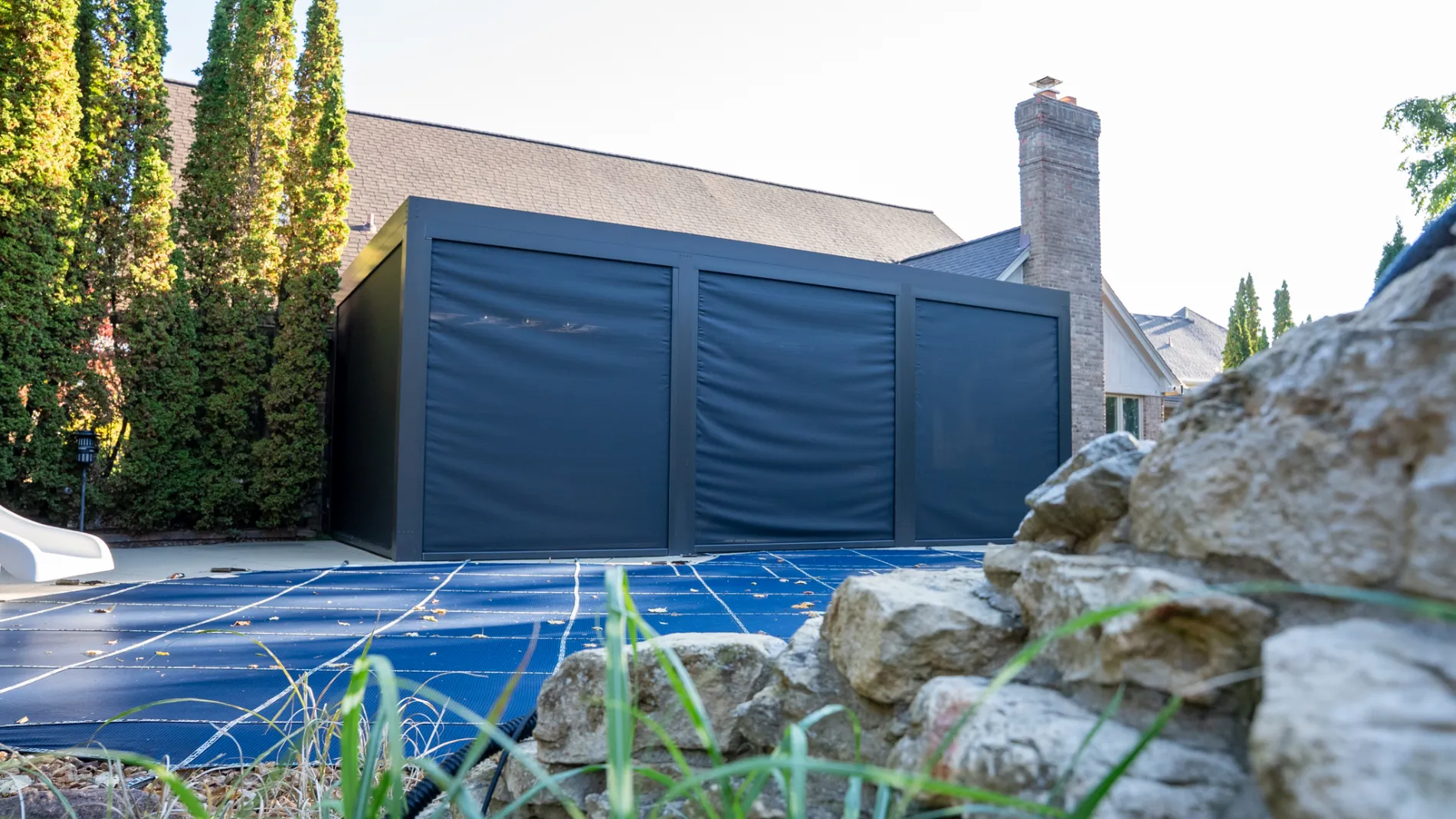
A screened-in porch is the better pick if you want permanent, always-on bug protection and a traditional enclosed room, or you’re building or enclosing from scratch. Motorized retractable screens are the better investment if you already have a patio, deck, or porch and want on-demand bug, sun, and wind protection that preserves open-air views—closing the “fourth wall” only when needed. In Michigan’s fast-changing weather, retractable screens give the most flexibility; a screened porch gives the most set-and-forget coverage.
What’s the Difference Between a Motorized Screen and a Screened-in Porch?
A screened-in porch is a permanent structure. Its framed walls and fixed mesh panels stay in place all year, and building one usually means a permit and structural work. Motorized screens are retractable. They drop into position when you want them and roll out of sight when you don’t, with no lasting change to your space.
Think of motorized screens like a sunroof for your patio. You lower them for shade, bug protection, or a wind break, then send them back up when you want the open view.
Can You Add Motorized Screens to an Existing Porch or Patio?
Short answer: Yes, and it’s one of the most common reasons homeowners choose them. Retractable porch screens can be installed under an existing covered patio, a porch overhang, or a pergola, including a StruXure louvered pergola, without major structural work.
Many people assume they have to build something new, but in most cases, you don’t. Motorized screen installation works with the covered structure you already have.
Motorized Screens vs. Screened-in Porch: Side-by-Side Comparison
| Factor | Motorized Retractable Screens | Screened-in Porch |
|---|---|---|
| Cost | ~$2,000–$6,500 per opening; ~$12,000–$24,000+ full perimeter | ~$2,000–$5,800 to screen an existing porch; $10,000–$35,000+ built from scratch |
| Install time | ~1 day per system; a few days for a full perimeter | Weeks — framing, roof, screening, often electrical |
| Flexibility | High — raise/lower on demand, smart-home compatible | Low — fixed panels, always in place |
| Views / open-air feel | Unobstructed when retracted | Permanently partially obstructed by mesh + frame |
| Seasonal use | Retract for sun; deploy for bugs/wind; retract & protect in winter | Constant passive protection year-round (not heated) |
| Permits | Often no permit if no major structural change (confirm with your MI building dept.) | Generally requires a permit (structure + often electrical) |
| Durability in MI weather | Retracts out of sun/snow/wind → less wear; 75 mph wind-rated (MagnaTrack) | Durable structure, but fixed mesh exposed year-round; may need rescreening |
| Resale value | Premium outdoor-living feature buyers value | ~70–84% ROI (typically lower, ~65–80%, in northern climates like Michigan) |
How Do the Costs of Motorized Screens and a Screened-in Porch Compare?
Short answer: Neither one is automatically cheaper, so the honest comparison is what each costs relative to what it gives you.
A new screened-in porch typically runs $10,000–$35,000 to build from the ground up. If you already have a porch and only need screening added, the screened-in porch cost drops to roughly $2,000–$5,800. For a full breakdown of what drives those numbers, see our screened-in porch cost breakdown.
Motorized screens run about $2,000–$6,500 or more per opening installed. A full patio perimeter with 3–4 openings can cost from $12,000 to $24,000 or more, which is why motorized screen costs in Michigan vary so much from project to project.
Resale value matters too. A screened-in porch is a documented performer, returning roughly 70–84% of its sale cost. That recovery tends to land at the lower end of the range in colder northern markets like Michigan (Angi). Motorized screens in Michigan add real buyer appeal and flexibility, but no fixed published figure exists for how retractable screens affect home value. The payback on a motorized screen investment shows up in daily use as much as in resale.
Are Motorized Screens Worth the Higher Per-Opening Cost?
Short answer: for the right home, yes. The per-opening price is higher, but you’re paying for flexibility, a preserved open view, and weather protection built for this climate. Fixed mesh on a screened porch can’t retract, so the view stays partly obstructed even on days you’d rather have nothing between you and the yard.
There’s also maintenance. Fixed screens need periodic rescreening and repair as the mesh ages and sags, whereas quality motorized systems are engineered to reduce service calls. MagnaTrack screens, for example, use a patented self-tensioning magnetic track that the manufacturer says eliminates about 98% of the jams and snags that send other systems in for repair. Fewer service calls over the years are part of the value math. If you’re weighing automation against a hand-operated system, our guide to motorized vs. manual screens breaks down the trade-offs.
Which Option Holds up Better in Michigan Weather?
Michigan asks a lot of anything you put outside. Hot, humid summers, hard winters, and a real storm season wear on outdoor structures.
Motorized screens were engineered for variable weather in a way that fixed screens weren’t. MagnaTrack screens carry a 75 mph wind rating, well above most competing motorized systems, and they’re designed to be lowered rather than raised when a storm moves in, so the screen shelters the covered space instead of catching wind like a sail.
The vinyl screen option changes the math further. Solar screens handle shade, UV, and airflow, while vinyl screens seal the space and hold temperature, turning a covered patio into a usable four-season porch in Michigan that stays comfortable into late fall and on milder winter days. A standard screened porch can’t survive the cold months without a much larger investment.
Do Retractable Screens Handle Snow and Cold?
Yes—largely because you can get them out of harm’s way. When snow, ice, or hard freezes set in, motorized screens retract fully into their protective housing, so the mesh isn’t left exposed to the weight of snow load or the wear of winter sun and wind. A screened-in porch, by contrast, keeps its fixed mesh in place through every freeze-and-thaw cycle. Neither option heats the space on its own, but the ability to tuck the screen away is a real advantage in a Michigan winter, reducing wear and helping the system last longer.
What About a Four-Season Room?
A four-season room is a fully enclosed, insulated, and often heated addition—a step beyond either option here. It delivers true year-round comfort in any weather, but it’s also the most expensive and permanent path, typically requiring full construction, insulation, HVAC, and permits. If your goal is a heated living space you use in every season, a four-season room may be worth pricing out; if you mainly want to extend comfortable open-air time from spring through fall, motorized screens or a screened porch usually deliver that for far less.
Which Investment Makes More Sense for Your Home?
The right choice depends on how you want to use the space and what you’re starting with. When you line up screened porch vs. motorized screens for a Michigan home, two situations make the decision clear.
A screened-in porch makes more sense if you want constant passive protection that’s always in place, prefer a traditional enclosed look, have a lower upfront budget, or don’t have an existing covered structure to build on.
Motorized screens make more sense if you want on-demand flexibility, already have a covered patio or pergola to build on, want open views when the screens aren’t needed, or want smart home control through an app, voice, or remote.
For Michigan homeowners who already have a covered structure, motorized screens are often the more versatile, weather-resilient long-term investment and a natural part of a larger outdoor living upgrade in Michigan.
Explore Motorized Screen Projects Across Michigan
The easiest next step is to see motorized screens in real Michigan homes. Skyview installs MagnaTrack motorized screens throughout Michigan, from metro Detroit to the west side of the state, and you can browse finished installations in the Skyview project gallery.
When you’re ready to talk specifics, set up a free consultation for a custom quote.
Motorized Screens vs. Screened-in Porch: FAQs
Are motorized screens worth the higher cost?
Yes if you value flexibility and open views; a fixed screened porch may be better value if you want the lowest up-front cost and constant protection.
Do motorized screens or a screened-in porch need a permit in Michigan?
A screened-in porch is a permanent structure and generally needs a building permit (often electrical too). Motorized retractable screens often don’t when there’s no major structural work—always confirm with your local Michigan building department.
Which adds more resale value?
Screened porches typically return ~70–84% of cost (lower in colder northern markets); motorized screens are a premium outdoor-living upgrade. Both help; neither guarantees full recovery.
Can I add motorized screens to my existing porch or patio?
Yes; they mount to an existing porch, patio, deck, or pergola without rebuilding.
Which lasts longer in Michigan winters?
Motorized screens retract and are protected when not in use, reducing wear; a screened porch’s fixed mesh stays exposed and may need rescreening.


