

Sunroom Vs Patio Enclosure: What Michigan Homeowners Should Choose
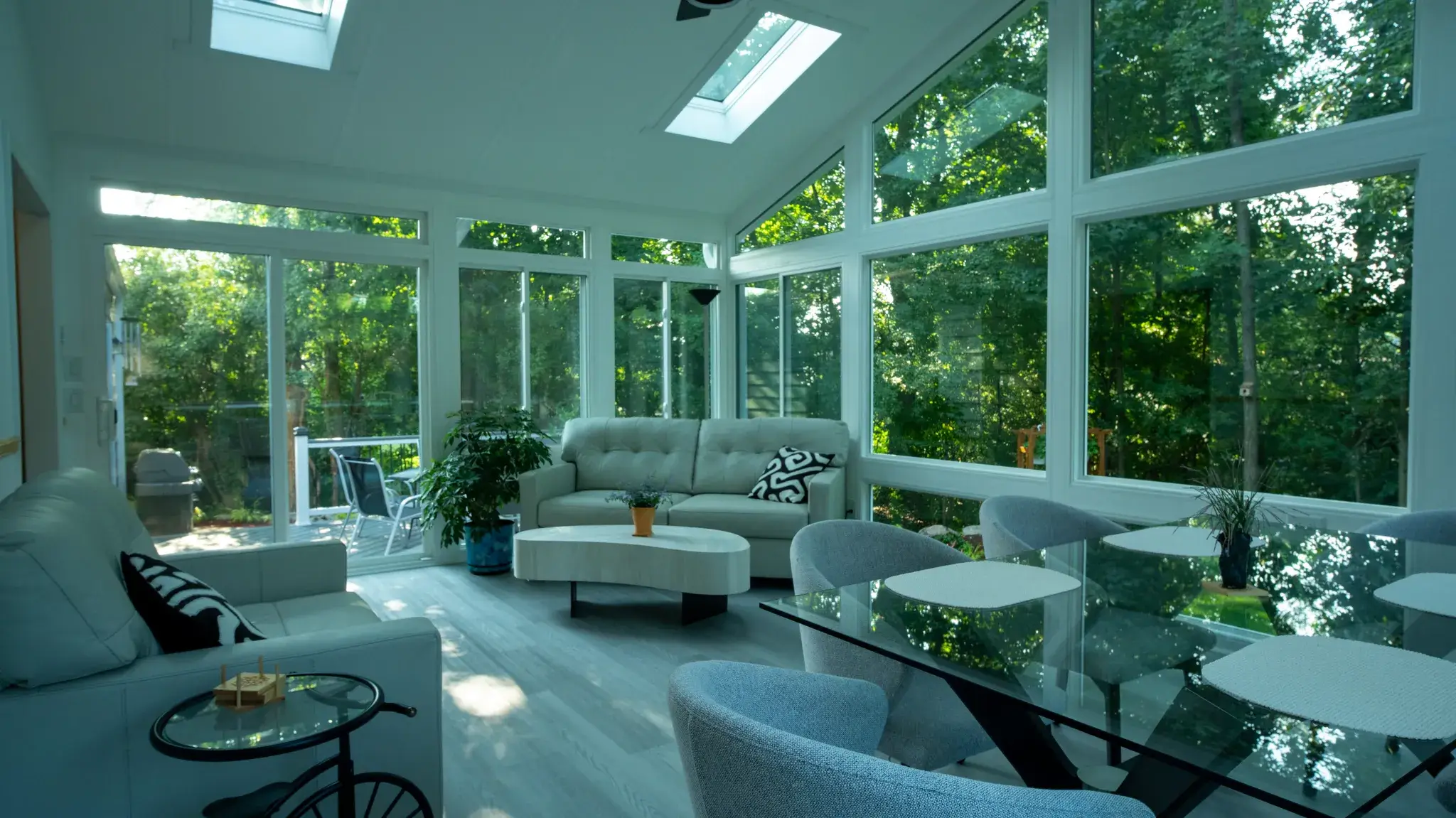
In July, the deck belongs to the mosquitoes. By October, Michigan homeowners are stacking patio chairs and dragging cushions into the garage until spring. That leaves only a few good weeks.
You want more months out of that space, but the options can blur together. Do you want a sunroom, patio enclosure, three season room, or screened porch? They don’t all deliver the same thing.
This sunroom vs patio enclosure guide covers your options and shows how Michigan weather shapes the choices.
What Is the Difference Between a Sunroom and a Patio Enclosure?
A sunroom is a fully insulated, climate-controlled room added to your home. A patio enclosure covers an existing patio or deck without that insulation or real heating and cooling.
A sunroom works like any other room. Michigan holds four-season sunrooms to the state’s residential energy efficiency rules. A three season room skips full climate control and behaves a lot like a patio enclosure.
A patio enclosure adds walls and a roof to an existing patio or deck. It blocks wind and bugs, but the inside temperature remains close to the outside. As for a screened porch, it trades glass for mesh.
The price goes up accordingly. A four season sunroom sits at the top because it needs full insulation, a permanent foundation, a building permit, and an energy code review.
A three season room or patio enclosure costs less. It usually sits on an existing slab or deck and gets by with light insulation and a portable heater or fan.
The more insulation and climate control you want, the more you pay and the more months you get to use the space.
Why Does Michigan Weather Matter When Choosing Between the Two?
Michigan’s cold winters and humid summers are punishing. You don’t want to end up with a really expensive place to store lawn furniture.
Spring and fall bring their own whiplash. April highs average 58°F while lows dip to 37°F.
Winter is the bigger problem. In Lansing, January lows average 17°F, with about 14 inches of snow that month. Detroit isn’t much kinder. The normal January low there is 19°F with 14 inches of snow, according to NOAA’s Detroit climate records.
Summer flips the script. Heat, humidity, and mosquitoes make open decks miserable by evening. Glass traps heat fast, and screens keep bugs out but can’t cool the air.
Only a true year-round sunroom handles both ends of that calendar.
Can You Use a Patio Enclosure Through a Michigan Winter?
Usually not, at least not comfortably. Most patio enclosures are three-season spaces. Thin walls and single-pane glass let January cold right in. To use an enclosed patio in a Michigan winter, you need these upgrades:
- Insulated walls and roof. Insulation keeps the winter cold out and stops added heat from escaping just as fast.
- Insulated or energy-efficient windows. The best sunroom glass uses double-pane glass with a Low-E coating and argon gas, which balances insulation, comfort, and cost.
- A heat source. If you use a portable space heater, give it clear space and plug it straight into the wall, never into an extension cord.
- A foundation below the frost line, which is the depth the ground freezes in winter. The standard mandated depth in Michigan is 42 inches, but local bodies may require more.
- A roof rated for snow load, meaning the weight of snow a roof can safely hold. In Southeast Michigan, a winter-ready sunroom roof may need a rating in the 30 to 40 pounds-per-square-foot range. Snowier parts of the state can call for much more.
But here’s the thing many people don’t tell you upfront. Add all five, and you haven’t upgraded a patio enclosure. You’ve built a four-season sunroom, with the budget and permits to match. The right materials also vary by wall and roof assembly.
What Makes a Screened Pergola a Flexible Alternative to Both?
Not everyone needs a winter living room. Some homeowners just want more good evenings between April and November.
A screened pergola adjusts to the weather instead of locking you into one fixed setup. It opens to sun and breeze on nice days and closes against rain or bugs when conditions turn.
Many use a louvered roof, made of adjustable slats that rotate to let in sun or close to block rain.
Take the StruXure pergola system with MagnaTrack motorized screens. Tilt the louvers for sun or shade. Press a button, and the screens drop to stop bugs and wind. StruXure is built to be leak-free and carries a structural warranty from the manufacturer.
A screened pergola works a lot like a motorized screen porch, but it isn’t heated. When the season ends, protect the room’s contents by bringing cushions, blankets, and other fabric items indoors. Glass, ceramic, and thinner plastic pieces can crack or degrade in freezing temperatures.
A sunroom means you’re in there in February with a cup of coffee. A pergola means you’re outside when Michigan allows it. Pick the option that fits your lifestyle.
How Do You Get Started With a Custom Design for Your Michigan Home?
Start with a free in-home design consultation. Someone comes out, takes a look at what you’ve got, and figures out what makes sense for your setup. You should know how you want to use the space and a rough budget range.
Next, you get a custom 3D rendering showing how a sunroom, enclosure, or screened pergola would look on your home. You can adjust colors, layout, and screens before anyone breaks ground.
Skyview handles the project from design through installation and backs the finished structure with a lifetime warranty.
Honestly, winter’s the best time to do this. You’ve got plenty of time to think. Book your consultation while the snow flies, and your new space can be ready for the first warm weekend of spring.


