

Do Sunrooms Increase Home Value In Michigan? What Buyers Actually Think
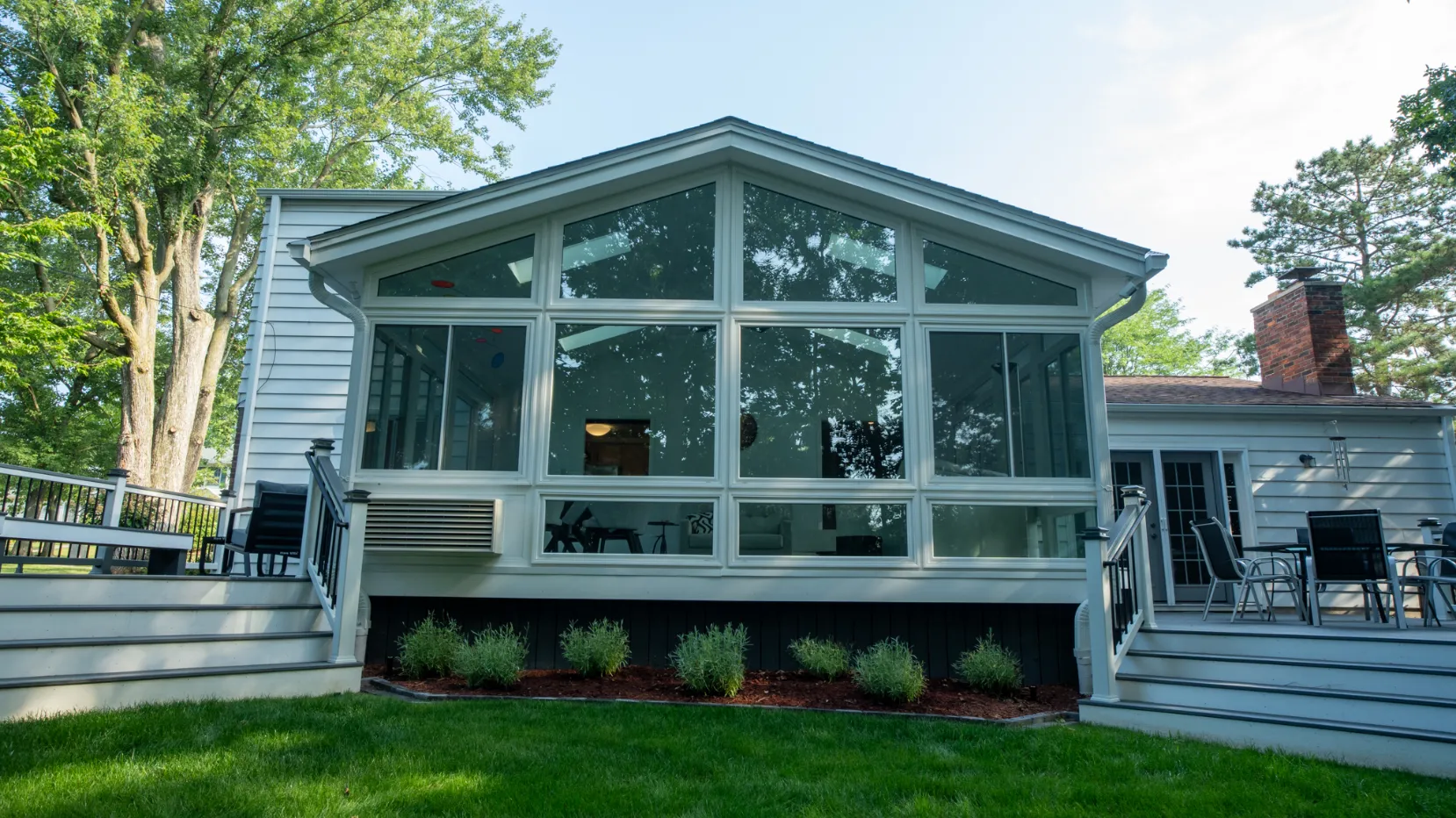
Sunrooms need to handle heat, snow, and seasonal wind, hail, and rainstorms. Built right, they can be the heavy hitters that give your family more places to hang out in comfort. But here’s a question: Do sunrooms increase home value in Michigan? The short answer: Yes. A sunroom can improve your property’s resale value, but the impact depends on whether it was built to count as part of the home.
How Do Appraisers Value A Sunroom In Michigan?
Appraisers keep things factual. For them, what matters is what the comparable sales show and whether the sunroom meets all square footage rules. When looking at the comparable sales, or comps, Michigan appraisers typically limit results to homes sold in the last three to six months. The radius is usually no more than a half-mile from your property, or one mile if results are sparse.
The sunroom resale value will depend on published cost-versus-value reporting. These figures vary widely by source, type of sunroom (four-season costs vs. three-season costs), build quality, and current market conditions. Why is there such variety for the sunroom appraisal value? Essentially, it’s because “sunroom” doesn’t have a single definition or style. It describes different structures that influence inspection rubrics and requirements.
Does A Sunroom Count As Square Footage?
It depends. To factor your newly constructed sunroom as gross living area (GLA), it needs to meet the standards from the American National Standards Institute (ANSI). Under ANSI Z765, your sunroom must be:
- Above grade
- Permitted
- Code compliant
- Insulated
- Finished to match the home’s standard
- Heated with the home’s permanent HVAC system
- Connected directly to the main living area
- Have ceilings reach no less than 5 feet high, with at least 50% reaching 7 feet
Typically, three-season room square footage won’t count because the space isn’t built for year-round living. It doesn’t meet all the criteria. For four-season sunroom space that qualifies, it’s often adjusted at a lower rate than standard main living space. This means its resale ROI for square footage isn’t as much as the rest of the home.
Now, what about an unpermitted sunroom addition in Southeast Michigan? Avoid it at all costs. If your sunroom doesn’t have a permit, it won’t count in an appraisal and can complicate financing. Inspectors and buyers’ agents will flag the addition as potentially affecting your home’s value.
What Do Buyers Actually Think Of A Sunroom?
Buyers start from emotion, working from how the house feels during a showing. They also want to visualize themselves living there and using the home’s rooms, which includes access to coveted indoor/outdoor living.
A bright, carefully staged sunroom that faces an attractive yard can be the deciding factor in one home over another. It’s an interesting outcome to the question, “Do sunrooms add value to a home?” This effect may not line up with what the appraisal shows, but it’s real and has discretionary value.
What Makes Buyers Discount A Sunroom?
Four-season sunroom home values won’t hold their worth in buyers’ eyes if they have poor-quality construction. This includes if the sunroom lacks seamless integration with the main home, has an awkward step-down entry, shows mismatched siding, or has aluminum or uninsulated walls.
The buyers’ perceived sunroom home value will decline for a space clearly unusable in a Michigan winter. Sunrooms that aren’t designed for full-time use lead to mentally discounting the space and reducing the square footage.
Which Type Of Sunroom Adds The Most Value In A Michigan Climate?
For four-season vs. three-season sunrooms, the four-season version is the best option for Michigan homes. First, it’s the type that can qualify for added square footage, which increases your home’s appraisal value. It’s also the type that buyers can picture using in climate extremes, whether February’s deep chill or July’s heat and humidity.
In a climate with four full seasons, a sunroom built for year-round use naturally adds the most value. It makes sense: Buyers want to maximize their living space. They can easily see themselves comfortable and warm in a plush chair, gazing out at the snowy Michigan landscape no matter how bone-chilling the weather.
You’ll get the best sunroom ROI from high-quality construction, energy-efficient materials like composite framing and insulated glass, and permanent heat connection for year-round comfort.
Will A Sunroom Raise Your Property Taxes In Michigan?
Yes, under the state’s Proposal A, you’ll have an increase in sunroom property taxes in Michigan. Sunrooms are considered new construction, and their value is added to your home’s assessed value. However, they’re taxed at 50% of true cash value because the main home already exists.
A permitted sunroom addition in Michigan won’t uncap the taxable value of the rest of the home. You’ll pay increased taxes for the sunroom. The following year, your taxes will be no more than 5% of the total taxable value. It’s predictable and proportional. Contact your local assessor for specific numbers for your sunroom addition.
How Do You Build A Sunroom That Holds Its Value?
In one word: cohesion. A sunroom that’s built as a permanent, permitted, four-season addition becomes a natural extension of the home. It looks like it has always been there. Skyview is a licensed design-build partner in Michigan with a proven track record for custom sunrooms that enhance your home. We incorporate LivingSpace sunroom construction with Cathedral and Studio styles tailored to your home’s unique specifications. With engineering and permitting handled, each sunroom we install goes up approved and built to last.
Let’s connect to schedule your free in-home design consultation for sunroom installation in Detroit and Southeast MI. ur home, contact us for a quote, or call (248) 617-2820 for more information.


